French Woman Apartment Morning
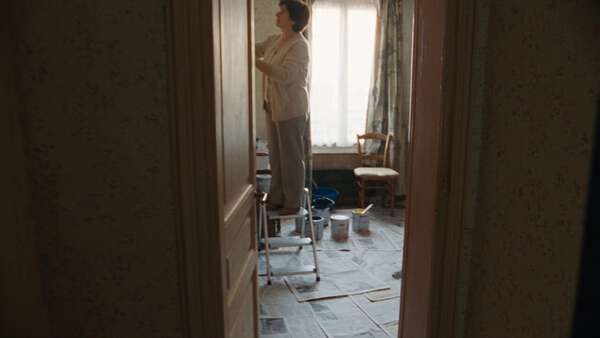
Main Subjects: Young French woman, 22, short wavy brown hair, oversized white T-shirt, loose blue jeans, old sneakers. Her mother, early 50s, short dark hair, beige cardigan over a…
Create a 30-second photorealistic cinematic continuous one-shot following an elderly botanist through a blinding white desert metropolis at solar noon. He is nearly eighty, deliberate and calm, wearing a faded linen suit and carrying a glass bell jar containing one fragile black orchid.The hidden truth of the city is not gravity or perspective. It is daylight.Every street, tower, balcony, courtyard, window, roof, and distant skyline is part of a colossal mechanical instrument that physically moves architecture to control exactly where sunlight falls. The botanist appears to be walking through ordinary shade, but thousands of hidden workers are folding the city around him so the orchid receives no direct light until one precisely calculated second. No cuts, fades, dissolves, portals, teleportation, invisible morphing, liquid buildings, or unexplained transformations. The camera remains one physically continuous stabilized shot. Every impossible change must occur through visible hinges, rails, cranes, gimbals, telescoping frames, counterweights, cables, turntables, sliding foundations, mirrored shutters, and human labor.Sunlight is infrastructure.Buildings do not bend like rubber. They rotate as massive rigid structures. Stone cracks, steel flexes, dust falls, cables strain, counterweights descend, gears miss teeth, and every movement carries weight, delay, friction, and momentum.The city is built from chalk-white limestone, oxidized copper, smoked glass, black iron, canvas shade sails, ribbed steel backs, and enormous solar mirrors. The sky is hard cobalt blue. Heat trembles above the streets. All shadow edges are sharp enough to reveal even the smallest architectural adjustment.The hidden “umbra engineers” wear indigo work clothes, copper helmets, and mirrored goggles. They appear inside wall cavities, on roof rails, beneath rotating sidewalks, behind false windows, and across high gantries. They carry brass sextants, chalk plumb lines, hand-cranked winches, sun compasses, tension gauges, and long poles painted with warnings:UMBRA LINESOLAR AZIMUTHHOLD APERTURESHADOW TRANSFERBLOOM WINDOW 12:00:30CAMERA RULEBegin tracking backward at the height of the bell jar, three meters ahead of the botanist. Gradually drift sideways and orbit him as the illusion becomes visible. The camera may ride a moving pavement plate, pass through an exposed building frame, rise on a counterweight lift, and roll slightly as architecture rotates, but it must never cut or pass through solid matter.Whenever the camera leaves the protected shadow, the harsh sun should expose the machinery hiding behind the beautiful facades.0:00 TO 0:06THE SHADOW WALKSBegin beneath a narrow stone arcade. The botanist walks toward camera with the orchid under one arm. A perfect oval of shade travels with him. At first the city looks still.Then an awning slides six inches along a brass rail. A row of balconies rotates one degree. Windows glide sideways across a facade to keep their dark openings aligned above him. Behind his shoulder, a six-story house quietly leans on hydraulic knees, stretching its shadow across his next three steps.The camera drifts into full sunlight.From this angle the arcade is revealed as a thin theatrical shell. Its rear side is a forest of braces, ladders, ballast stones, pulley wheels, and workers sprinting to the next position.A warning bell rings.The entire facade pivots toward the camera with a deep stone groan and becomes convincing again.The botanist never looks up.0:06 TO 0:12THE STREET BECOMES A CEILINGHe turns into a completely sunlit avenue.Workers release two enormous counterweights.Apartment blocks on opposite sides bow inward on foundation hinges. Their upper floors cross above the street and balconies interlock, transforming the avenue into a temporary vaulted tunnel while he continues walking.Inside the tilting buildings, furnished rooms remain level within circular steel gimbals. Families eat lunch while their apartments rotate behind the windows. A grand piano slides several feet, is caught by three workers, and is winched back before the botanist can notice.The camera circles wider and briefly reveals both blocks as narrow wedge-shaped structures with inhabited fronts and mechanical backs.A clock tower folds horizontally across the avenue like a drawbridge. Its long shadow reaches the orchid one step before direct sunlight does.The botanist walks beneath its enormous clock face as gears rotate above his head.0:12 TO 0:18THE CITY TURNS ITS INSIDE OUTHe enters a circular market square.The square is actually four nested courtyards stored inside one another.The outer facades split down the middle and slide away on buried rails. Inner courtyards rise vertically from below, already carrying shops, fountains, laundry, pedestrians, and trees rooted in rotating steel tubs. One complete neighborhood descends while another locks around the botanist without interrupting his stride. Market stalls climb the walls on chain-driven platforms. Vendors calmly continue weighing fruit while their shops travel upward. A fountain rotates onto its side, yet its water is caught inside transparent channels and redirected overhead as a cooling canopy.A vast shadow sweeps across the square like a passing cloud.The camera rises on a moving counterweight and reveals that the “cloud” is a district-sized perforated copper screen travelling across aerial rails between towers.Hundreds of workers hang beneath it, opening and closing thousands of small shutters by hand. At exactly 0:16, one main cable snaps.0:18 TO 0:24THE SHADE FALLS APARTThe copper screen twists violently.Sunlight races across the buildings toward the orchid.The botanist notices the leaves beginning to curl.For the first time, he runs.The city abandons all subtlety.A twelve-story hotel unpins from its foundations and rotates horizontally across the boulevard on a gigantic ring crane. Its roof becomes a ceiling, its facade becomes the floor above, and its open central corridor aligns with the botanist’s path.He runs directly through the rotating hotel as bedrooms revolve around the camera like compartments in a wheel.Beds, chandeliers, bathtubs, guests, and service carts remain upright inside smaller counter-rotating frames. Workers cling to the exposed outer walls, hammering steel wedges into place.The camera passes through an unfinished section of the hotel where floors, pipes, staircases, elevator shafts, and room modules are all visible rotating around the lens.Behind him, the street folds upward like one cover of a massive book.Ahead, a second street stored vertically between two towers unfolds from above. Hundreds of cables lower it into position. It lands on hydraulic supports and meets the first pavement beneath his next footstep with a thunderous mechanical lock.The moving shadow shrinks until it is only the size of the bell jar.0:24 TO 0:30THE CITY BECOMES AN IRISHe reaches a circular stone platform at the center of the city and places the orchid into a brass socket.All surrounding towers rotate inward like the blades of a colossal camera aperture.Skyscrapers kneel.Bridges curl overhead.Courtyards flip vertically.Apartment blocks rotate until their rooftops become interior walls.Distant miniature skylines slide down their horizon tracks while the real buildings behind them fold into storage trenches.Entire white districts close across the sky until the city forms a vast mechanical flower around one dark central opening.For one breath, everything is black.Thousands of workers freeze on suspended scaffolds.Then the city begins its final calibration. One tower rotates half a degree.A bridge lowers three inches.A mirror turns on a brass bearing.Thousands of shutters click into alignment.A single needle of sunlight enters the aperture, reflects between enormous mirrors, travels across the darkened city, and lands precisely on the orchid at 0:29.The flower opens.The audience realizes the city was never merely protecting it from the sun.The city was saving one exact ray for the instant it could bloom.The orchid slowly turns toward the light.Every tower, street, bridge, window, mirror, and worker rotates one final degree to follow it.End only after the last building locks into place.PHYSICAL TRANSITION CHAINMoving arcade shadow to hinging apartment tunnel to horizontal clock tower to nested market courtyards to mechanical cloud screen to rotating hotel to folding streets to aperture city.PACINGBegin with corrections so small they could be mistaken for normal city movement.Reveal the first false facade at 0:04.Escalate to entire inhabited buildings by 0:08.Let the market square perform impossible but mechanically understandable architectural exchanges.Break the system at 0:16.Accelerate into a dense running sequence from 0:18 to 0:24.End with a slower, monumental folding of the whole skyline, followed by one delicate biological movement. CAMERA BEHAVIORThe camera must always move through physically available space. It may ride platforms, lifts, rails, bridges, and rotating structures, but it cannot teleport or clip through architecture.Its changing angle should repeatedly expose how each illusion works.From the botanist’s protected path, the city should appear elegant and complete.From outside the path, reveal thin facades, unfinished backs, miniature skylines, suspended rooms, workers, braces, cables, scaffolding, and enormous empty spaces between neighboring buildings.Keep the bell jar visible during every major transition so the audience always understands what the city is protecting.VISUAL QUALITYUse extreme photorealism and richly tactile practical materials:Sun-bleached stone.Oxidized copper.Greasy black bearings.Cracked plaster.Frayed canvas.Smoked glass.Polished brass instruments.Dented counterweights.Dust-covered cables.Hand-painted measurements.Heat-warped timber.Thousands of chalk calculations covering the unseen sides of buildings.Architecture must show resistance.Stone blocks should scrape against one another.Metal structures should flex before moving.Loose objects should react to acceleration.Dust and fragments should fall whenever a building locks into a new position.Nothing should move weightlessly or stop instantly.SOUNDUse dry desert wind, cicadas, distant market voices, sliding stone, groaning steel, pulley squeals, ratchets, snapping canvas, falling grit, strained cables, warning bells, shouted measurements, and the bass impact of foundations locking. At 0:16, punctuate the cable snap with sudden silence. As the botanist starts running, introduce accelerating gears, pounding footsteps, emergency bells, and workers shouting solar coordinates.During the final aperture closure, combine thousands of gears and shutters into one low resonant chord, as though the entire city is taking a breath. At 0:29, remove everything except the soft click of the flower opening.TONEMonumental, tactile, elegant, uncanny, tender, sun-scorched, mechanically believable, and filled with architectural wonder.MOST IMPORTANT RULEThe visual illusion must be created by buildings continuously moving in full view. At least one building-scale element must be moving, settling, rotating, folding, or revealing its hidden mechanism during every second of the shot. No supernatural light, telekinesis, digital warping, liquid architecture, unexplained floating, or instant transformations.Every shadow must come from a visible physical object.Every architectural transformation must reveal hinges, rails, supports, counterweights, crews, structural stress, or mechanical consequences.The botanist does not discover that the city is fake.He discovers that the city has been waiting for the flower.
Main Subjects: Young French woman, 22, short wavy brown hair, oversized white T-shirt, loose blue jeans, old sneakers. Her mother, early 50s, short dark hair, beige cardigan over a…
Cinematic video of a young East Asian woman with long dark hair kneeling on cracked concrete in a dystopian ruined city at night. Dark organic symbiote tendrils spread outward from…
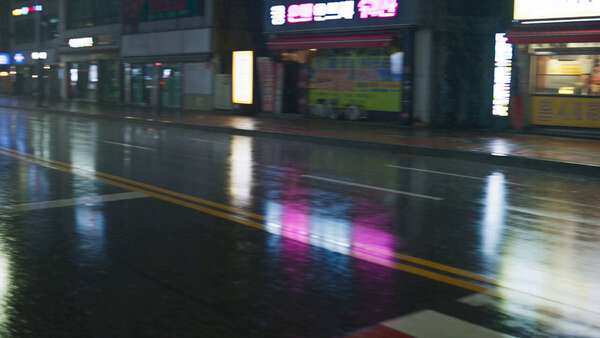
Create a 15-second ultra-realistic cinematic video of exactly two adult Korean best friends on a spontaneous midnight road trip through South Korea. Start with a rainy neon-lit cit…
Character A, face and outfit matching the reference image. Shot 1 (0.0–1.2s): She wakes disoriented on a cold concrete floor in a numbered tracksuit, surrounded by an unfamiliar in…
Two young korean female friends enjoy a fun day together in a lively city, laughing as they walk, choosing colorful desserts at a café display, sharing street food, taking a playfu…
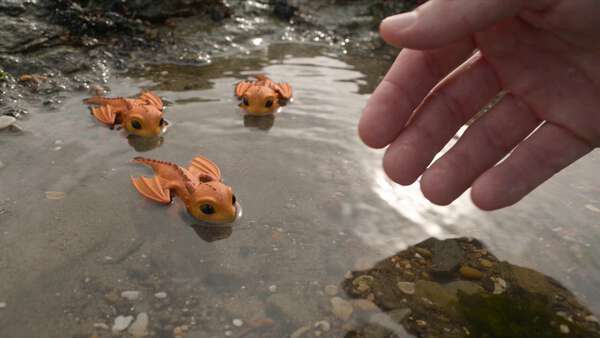
Create a 15-second ultra-realistic vertical phone-camera video of a tiny baby dragon at the edge of a shallow tide pool. The whole video should feel like a calm viral nature clip f…