A Birthday on DV: Seven Scenes in Early-2000s Korea
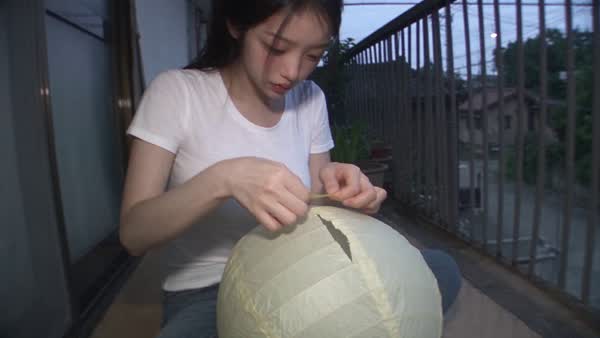
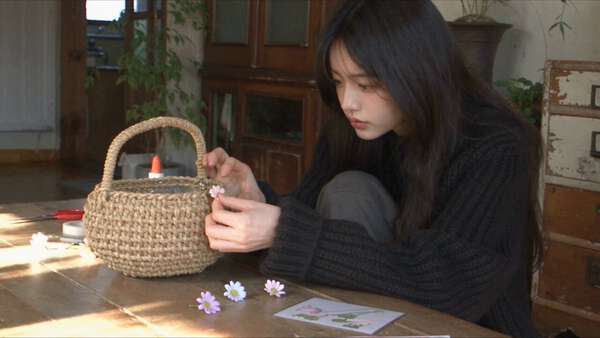
Create a 30-second ultra-realistic Korean birthday vlog set in South Korea in the early 2000s, filmed casually by a friend on an authentic consumer DV camcorder. It must feel like …
オープンソース の素晴らしい動画プロンプト集 · 7,195件収録
Create a 30-second, 4:3, 1080p ultra-photorealistic archival video of an ordinary school day at a single public high school in Tokyo, Japan, in 1995. The entire video must look like genuine footage recorded in 1995 using a high-end professional broadcast video camera in its native 4:3 frame. It should feel like authentic archival footage that was carefully digitized in HD years later—not a modern recreation, cinematic production, or AI-generated vintage effect.
MAIN FOCUS: The video stays entirely inside one ordinary Tokyo high school and its immediate front gate area: the school gate, bicycle parking, shoe-locker entrance hall, linoleum corridors, a chalkboard classroom, the dirt athletic ground, and an empty classroom at dusk. Students in period-correct uniforms move through the building and grounds in a normal day: arriving, changing shoes, sitting through class, talking during break, and staying for after-school club activity. The camera should feel like a school staff member or a local TV crew casually documenting a normal day, rather than filming a ceremony, a news event, or the architecture of the building.
UNIFORM RULE (applies to every shot): Every female student wears the same navy long-sleeved sailor uniform: white triple-stripe collar, white neckerchief, navy pleated skirt, white socks or slouch socks, loafers or indoor shoes. Every male student wears the same black stand-collar gakuran with gold buttons and black trousers. The whole school shares these two uniforms consistently, in every corridor, classroom, and outdoor shot.
DRINK CAN DESIGN (15–20s shot): The cans are soft-drink cans printed edge to edge in matte chalk white, with no bare silver aluminum showing anywhere on the body. Across the white ground sits a scattered pattern of medium sky-blue polka dots, and a horizontal royal-blue band near the upper third carries small blue Japanese lettering. The rim and pull tab are plain silver; everything below the rim is white and blue. The overall read is a milky white and blue dairy soft drink, soft and pale, with no red, no gold, no black, and no metallic body.
SCENE SEQUENCE: 0–5s: Morning at the school gate. Girls in navy sailor uniforms and boys in black gakuran walk in from the street in loose groups, some pushing bicycles toward a covered bicycle rack packed with mamachari. A teacher in a navy tracksuit stands near the gate greeting them. Natural handheld camera movement at eye level. 5–10s: The entrance hall with rows of steel shoe lockers. Students swap outdoor shoes for white indoor shoes, drop their bags on the floor, call to friends, and head up the stairs. The camera slowly pans across the lockers and follows the flow of students into the corridor. 10–15s: Inside a classroom during a lesson, shot from the BACK of the room. The camera stands in the rear corner behind the last row of desks and looks forward toward the front wall of the classroom. Students are seen from behind and in three-quarter rear view, heads bent over notebooks, rows of desks receding away from the camera. At the far end of the room the teacher stands at the front chalkboard, facing the class and writing Japanese on the board, with the classroom door and the teacher's podium on that same front wall. Windows run along the left wall, the corridor wall along the right. The rear notice board stays behind the camera and out of frame. Late-morning daylight crosses the desks from the left. 15–20s: Break time in the corridor. A group of girls in sailor uniforms sit on the sunlit corridor floor with their backs to the windows, talking and laughing. Several hold the white polka-dot soft-drink cans described above, drinking and resting them on their knees. One girl holds an open weekly manga magazine so the others can see the page, another eats a sweet bun from a paper wrapper, hands empty otherwise. Boys in gakuran pass along the corridor behind them. Their hands hold only the cans, the magazine, and the bun. 20–25s: After school on the dirt athletic ground. The baseball club practices in dusty white uniforms: players wearing caps, and every bareheaded player has a closely shaved buzz cut. Students in navy track suits run laps around the perimeter, a brass band rehearses somewhere out of frame, and volleyball practice is visible through open gymnasium doors. The camera gently follows the movement across the ground, dust lifting under running feet. 25–30s: Dusk inside an emptied classroom on an upper floor. Low orange sunlight comes in almost horizontally through the west-facing windows, throwing long window-frame shadows across the floor. Chairs are stacked upside-down on the desks, the chalkboard is wiped to a faint smear, a curtain lifts in the breeze. Two girls in sailor uniforms sling their bags over their shoulders, slide the windows shut, and walk out through the front door of the room; the empty classroom holds for a moment. End abruptly and casually, like genuine archival footage stopping mid-observation.
DIALOGUE (natural spoken Japanese, ordinary mid-1990s high-school speech, lip-synced to the visible speaker, at conversational volume inside the location ambience): 2s — Teacher at the gate, to passing students: 「おはよう。急がないと遅れるぞ」 3s — A girl walking past him, glancing back: 「おはようございまーす」 7s — A girl at the shoe lockers, calling up the stairs while changing shoes: 「先行ってて、すぐ行くから」 8s — A boy already on the stairs, not stopping: 「早くしろよ、鐘鳴るぞ」 12s — The teacher at the front chalkboard, still writing, over his shoulder: 「はい、ここ大事だから線引いといて。テストに出すぞ」 17s — A girl holding the open magazine, leaning toward her friend: 「ねえ、これ見た?」 18s — The girl next to her, mid-sip from the can, laughing: 「見た見た、やばいよね」 19s — The girl with the bun, holding it out: 「一口ちょうだい」 22s — A baseball player from across the ground, hands cupped: 「ナイスボール!」 23s — Another player, throwing back: 「もう一本お願いします!」 28s — A girl at the window, bag on her shoulder: 「帰ろっか」 29s — The other girl at the door, hand on the light switch: 「うん。電気、消したよね」
CAMERA & CINEMATOGRAPHY: Authentic mid-1990s professional video-camera footage in 4:3. Mostly eye-level and standing-height viewpoints, with occasional slightly elevated angles from a staircase landing or the corridor end. Natural handheld operation with subtle camera shake, small framing imperfections, slow manual pans, gentle zoom adjustments, realistic autofocus behavior, and occasional minor exposure changes when moving between bright windows and dim corridors. The camera should feel operated by a real person walking through the school in real time. Keep movement plain and functional. All footage is handheld or shoulder-mounted, at human standing height, inside the school grounds.
IMAGE QUALITY: Surprisingly clear and detailed for genuine 1995 professional video footage. Sharp enough to clearly read chalk handwriting, uniform details, shoe-locker name tags, printed notices, and the texture of the dirt ground. Slight softness around image edges, authentic analog video characteristics, mild highlight bloom on the classroom windows, subtle chromatic aberration, realistic motion blur, and extremely light broadcast-video noise. The footage should resemble high-quality archival Betacam or professional broadcast footage transferred carefully into modern HD.
COLOR & LIGHTING: Natural daylight under slightly overcast Tokyo skies for the morning and midday shots; indoors, daylight through large windows mixed with pale fluorescent ceiling tubes, giving corridors a faintly green cast. The final shot is warm low-angle sunset light, deep amber on the walls and desks, with the corridor beyond already falling into blue shadow. Soft diffuse lighting, realistic shadows, muted but authentic mid-1990s color reproduction, slightly lower dynamic range than modern digital cameras, and subtle analog color characteristics. Colors remain believable and natural: white indoor shoes, dark navy wool, chalk dust, pale green chalkboard, worn beige linoleum, dry brown dirt of the athletic ground, and the chalk-white and sky-blue of the drink cans.
HISTORICAL AUTHENTICITY: Everything must accurately reflect a Tokyo high school in 1995: Wooden-topped steel-framed desks, green chalkboards and chalk trays, blackboard erasers, a wall clock, a class duty roster, printed and handwritten notices in Japanese, steel shoe lockers, mamachari bicycles, canvas school bags and Boston bags, tracksuit-clad teachers, hard plastic pencil cases, paperback books, disposable film cameras, weekly manga magazines, and printed soft-drink cans from a period vending machine. Hairstyles, eyebrows, and accessories reflect mid-1990s Japanese high school students; hands hold paper, cans, pens, and bags. Japanese-language signage and printed materials should visually resemble authentic mid-1990s typography and school design.
REALISM: Students must move independently and naturally, with varied walking speeds, gestures, posture, uniform wear, and destinations. Some walk alone, some in groups, some run. Crowds in the corridor and entrance hall should look individual and unsynchronized. Classroom behavior is ordinary: shifting posture, note-taking, whispering, stretching, glancing at the clock. Speaking students move their mouths in natural sync with the Japanese lines, with ordinary breath, small head movements, and eye contact toward whoever they address; everyone else keeps talking quietly underneath. Desks, lockers, windows, pillars, signs, and the gymnasium must remain geometrically stable throughout every shot. Natural reflections in classroom windows, realistic chalk dust in window light, dust lifting from the dirt ground under running feet, believable shadows, and physically accurate motion are essential.
EDITING: Use several connected observational shots with simple cuts, resembling genuine footage recorded during one day inside one school, running from morning to dusk. Each shot uses a different location and a different vantage point from the one before it. Plain cuts only, real-time pacing, clean image with no added graphics.
AUDIO: Natural location sound only: the Japanese lines above spoken by the students and teacher on screen, plus footsteps on linoleum, shoe lockers clattering, overlapping student chatter in Japanese, chalk on the board, a distant brass band rehearsing, bicycle bells, the school bell chime, and quiet room tone with a curtain moving in the final shot. All speech is in Japanese.
FINAL RESULT: The viewer should genuinely believe they are watching authentic archival footage of a Tokyo high school filmed in 1995 with an unusually high-quality professional video camera, in original 4:3. It should feel observational, spontaneous, and historically authentic—an ordinary school day captured on camera, from the morning gate to an empty classroom at sunset. The realism of human behavior, period details, lighting, and authentic camera imperfections is more important than cinematic beauty.
NEGATIVE PROMPT: widescreen, 16:9, letterboxing, English dialogue, subtitles, beer can, alcohol, silver aluminum can, bare metallic can body, brushed metal finish, red logo, gold logo, black label, energy drink can, cola can, AI-generated appearance, CGI, modern Japan, smartphones, flip phones, mobile phones, pagers, handheld electronic devices, tablets, laptops, LED screens, blazer uniforms, girls in gakuran, boys in sailor uniforms, mixed or inconsistent uniforms, long-haired bareheaded baseball players, teacher writing on the rear blackboard, camera placed at the front of the classroom facing the students, modern architecture, fake vintage filter, excessive grain, VHS scanlines, tape distortion, oversaturated colors, teal-orange grading, drone footage, gimbal smoothness, impossible camera movement, empty school in daytime shots, duplicated students, synchronized crowds, warped desks, flickering architecture, unreadable or modern signage, anime or illustration style, text overlays, logos, watermarks.
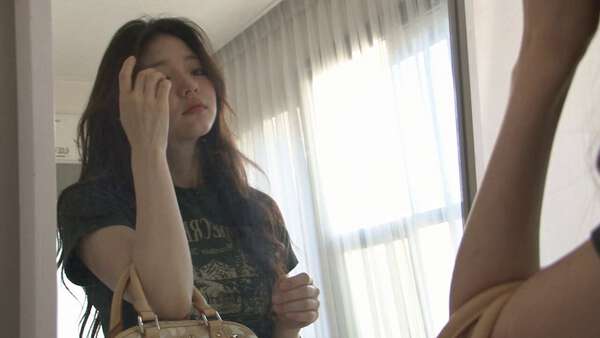
Create a 30-second ultra-realistic Korean birthday vlog set in South Korea in the early 2000s, filmed casually by a friend on an authentic consumer DV camcorder. It must feel like …
image = Main Subject. Preserve her exact face, identity, hairstyle, skin tone, body proportions, and outfit throughout. Authentic Southeast Asian/Korean woman, early-2000s atmosphe…
30 SECONDS • ULTRA-REALISTIC EARLY-2000s CONSUMER DV CAMCORDER HOME VIDEO • AUTHENTIC KOREAN EVERYDAY LIFE • CANDID • PLAYFUL • NATURAL • IMPERFECT • 16:9 Create an ultra-realistic…
Main Subject: Young Korean woman, 24, naturally attractive, realistic skin, minimal makeup, long dark hair worn completely loose and naturally flowing around her shoulders. Minimal…
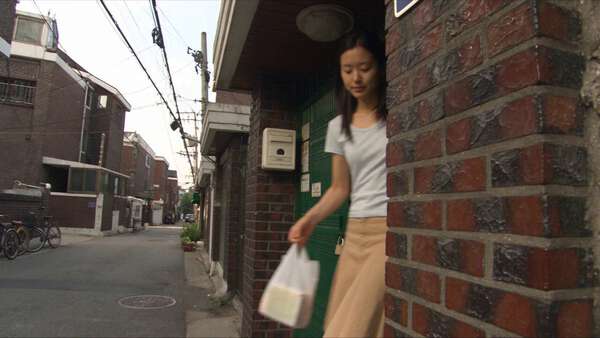
Create a 30-second ultra-photorealistic early-2000s Korean DV-camcorder home video of a young Korean woman spending a quiet afternoon exploring an older Seoul residential neighborh…
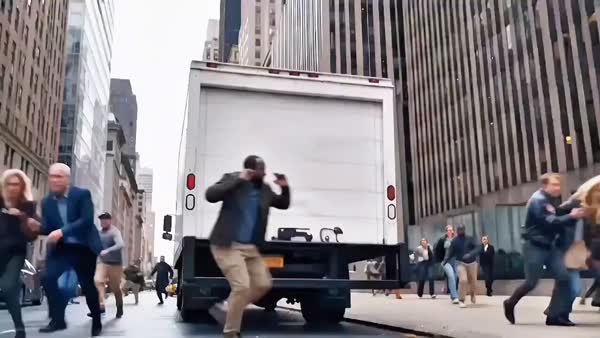
Photoreal overcast Manhattan street, wet asphalt, yellow taxis. A giant reddish-brown octopus with red eyes bursts from a white box truck, throws cars, and smashes traffic as peopl…
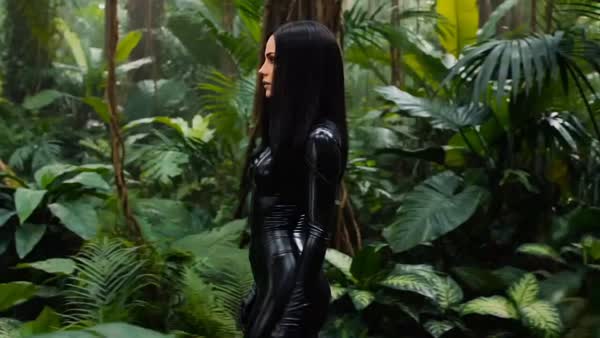
Cinematic realistic jungle scene, misty rainforest, soft natural light. A tall woman with long black hair in a glossy black bodysuit walks forward, then crouches low. Extreme close…
courier must reach a departing cargo airship while two interceptors close in. The camera follows the road as it rotates from street to wall to ceiling, then releases into open-air …
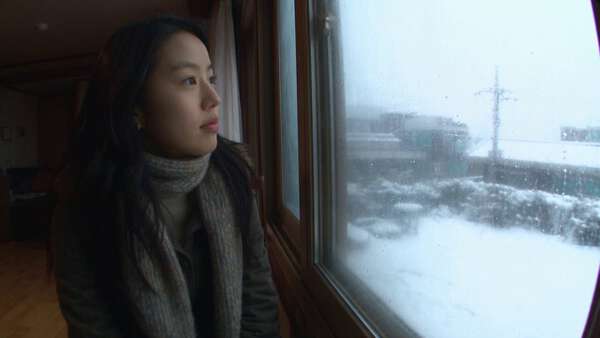
Create a 30-second ultra-photorealistic early-2000s Korean DV-camcorder home video of a young Korean woman experiencing Seoul’s first snowfall of winter. Use the attached image as …
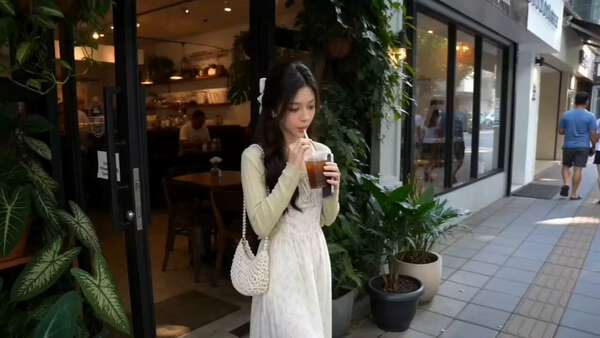
Create a 60-second ultra-realistic cinematic lifestyle vlog featuring a beautiful young Korean woman with long dark brown hair, soft natural makeup, and a gentle smile. She wears a…
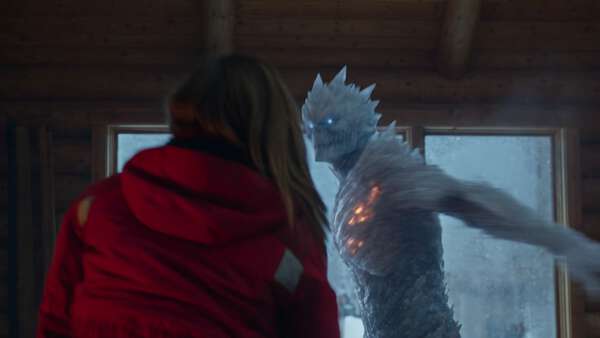
Cinematic horror-thriller short film set at a mountain ski resort lodge during a snowstorm, opens with an immediate hook, grounded realistic style, maximum dynamic camera work. Set…
REFERENCE: @img1 = main character's face and look (use the close-up for her face). The friend, bedroom, and door are described fully in this prompt, so no other images are required…