Blonde Woman With Black Umbrella
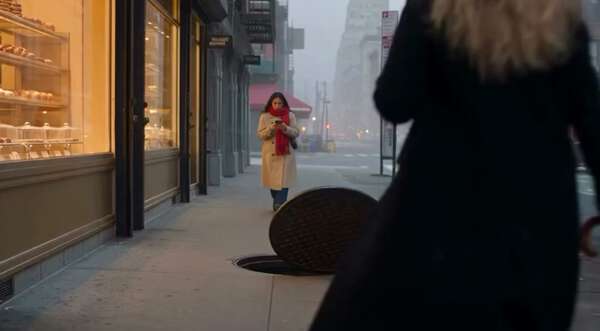
Duration: 30 seconds Aspect Ratio: 16:9 Style: Photorealistic live-action, surreal street comedy, cinematic urban storytelling. CHARACTER CONSISTENCY Main Woman: A stylish young ad…
オープンソース の素晴らしい動画プロンプト集 · 7,786件収録
Create a 30-second cinematic continuous one-shot in which a young girl walks through an ordinary city while a hidden municipal crew manually controls gravity around her using ropes, counterweights, tilting floors, rotating buildings, and enormous balancing machines. She believes the world is naturally stable. The audience gradually realizes that hundreds of workers are constantly adjusting its weight to keep her upright.
No cuts, fades, dissolves, portals, teleportation, or invisible transformations. The camera remains one physically continuous moving shot, tracking beside and around her at a steady walking pace. Every transition must happen through real mechanical movement within the shot.
Gravity is not magical. It is infrastructure.
Streets rotate on giant bearings. Rooms pivot inside steel gimbals. Trees are held upright by tension cables. Rain is pulled downward by weighted silver threads. Workers attach ballast to clouds. Furniture slides into position because unseen crews are changing the angle of the floor. Every effect must feel heavy, practical, imperfect, and physically operated.
The gravity workers wear faded gray uniforms and move quickly through narrow maintenance gaps at the edges of frame. They carry sandbags, pulleys, brass levels, plumb bobs, winches, and enormous iron weights. The girl almost never sees them because they always work behind her, beneath her, or just outside her peripheral vision.
Shoot it with warm morning light, monumental practical machinery, polished brass, worn steel, thick ropes, chalk measurements, grease marks, drifting dust, and the deep groaning sound of structures under tension. The visual language should blend an ordinary European city, an old astronomical observatory, and a vast industrial clock.
0:00–0:06: BREAKFAST AT ZERO DEGREES
Begin inside a small apartment kitchen.
A girl, around twelve, eats toast while standing at the counter, tying one shoe with her foot resting on a chair. A glass of orange juice sits perfectly level beside her.
Behind the kitchen wall, barely visible through a narrow service hatch, two gravity workers turn a huge brass wheel.
The entire apartment is actually mounted inside a circular gimbal.
As the girl leans down to grab her school bag, the room quietly rotates three degrees to meet her movement. The juice remains level. The chair rolls half an inch, then is caught by a gloved hand that retreats beneath the cabinet.
She walks toward the front door.
The kitchen begins rotating behind her as the hallway rotates toward her from the opposite direction. Their floors align beneath her next step with a heavy mechanical clunk.
She does not notice.
The camera tracks backward ahead of her, maintaining a calm, centered composition while the architecture slowly revolves around both of them.
0:06–0:13: THE CITY BALANCES ITSELF
She exits the apartment building onto a steep city street.
The street appears normal at first.
Then the camera drifts slightly wider and reveals that the entire block is resting on an enormous pivot.
As she walks downhill, gravity workers sprint along overhead catwalks, releasing counterweights to keep the pavement level beneath her feet. Buildings on one side rise several inches. Buildings on the other side sink into the ground.
A delivery truck begins rolling backward.
Three workers leap onto a rope, using their combined weight to pull the truck into place.
A flock of pigeons launches from a rooftop. Each bird is attached to an almost invisible silver line being reeled across the sky by operators on a distant crane.
The girl steps onto a tram.
The tram does not move forward.
Instead, the city rotates around it.
Rows of buildings pass by on gigantic circular tracks. Street signs swing into place. Pedestrians walk on moving belts. A church tower is carried past horizontally, then lifted upright by a forest of cables just before she looks through the window.
She watches the city with mild boredom and unwraps a piece of candy.
0:13–0:19: THE WEIGHT SLIPS
She steps off the tram into a public square.
The gravity machinery is beginning to fall behind.
A fountain leans several degrees to the left. Its water continues falling in the wrong direction, pulled sideways by weighted threads.
A worker frantically cuts the threads and attaches new ones.
The girl notices a coin floating beside a storm drain.
She reaches toward it.
The coin suddenly drops as a distant counterweight slams into place.
A fruit cart breaks loose and begins sliding toward her, although the square appears perfectly flat. Four workers throw themselves onto a ballast platform. The ground tilts back just enough for the cart to stop against her shoe.
She looks down.
An apple rests against her foot.
She picks it up.
At exactly 0:17, everything becomes silent.
She turns and sees a gravity worker standing in full view at the center of the square.
He is an elderly man in a gray uniform, frozen while holding a rope attached to the moon, which hangs pale and visible in the daytime sky.
The rope is wrapped around his waist.
The moon is slowly pulling him upward.
They stare at each other.
He gives her a small, embarrassed wave.
Then his boots leave the ground.
0:19–0:25: SHE FOLLOWS THE FALL
The girl grabs the trailing rope.
The moon pulls both of them sideways.
She is dragged into a run through the square as the camera accelerates beside her.
The city can no longer maintain the illusion.
The street tilts vertically behind her.
Cars slide upward along building walls.
Pedestrians calmly step onto rotating sidewalks operated by crews below.
An entire apartment block turns ninety degrees on a massive axle, revealing furnished rooms stacked like compartments in a wheel. Families continue eating breakfast while workers tighten bolts beneath their tables.
The girl and the gravity worker race through a maintenance gate hidden behind a rotating billboard.
They enter the machinery beneath the city.
There is no natural up or down here.
Thousands of workers walk across walls, ceilings, ladders, suspended platforms, and turning wheels. Rivers move through transparent pipes. Clouds are stored in weighted nets. Mountains hang upside down from chains. The ocean is held inside an immense tilted glass reservoir.
The camera rolls gradually with the girl until the horizon disappears completely.
She releases the rope.
Instead of falling, she floats forward.
0:25–0:30: THE CENTER OF DOWN
She enters a vast spherical chamber beneath the world.
At its center hangs a tiny black iron object, no larger than a plum.
Everything is suspended around it.
Buildings, oceans, trees, chairs, trains, clouds, and thousands of workers all point toward this single object from every direction, forming a complete city across the inner surface of the sphere.
The elderly worker floats beside her and places a brass plumb bob in her hand.
The bob points toward the black object.
She turns the plumb bob gently.
The direction of gravity changes.
Across the entire chamber, the city responds.
Workers lift from their platforms. Rain curves through the air. Houses rotate on their foundations. The ocean climbs the walls in one immense, silent sheet.
The girl begins falling upward toward her apartment.
The camera falls with her.
Her kitchen rotates into position around her just before she arrives. The chair catches her feet. The glass of orange juice lands upright on the counter without spilling.
She is back where she began.
Her mother enters carrying a plate, completely unaware.
The girl looks at the brass plumb bob still hidden in her hand.
She tilts it slightly.
The toast rises from her plate and floats toward her mouth.
She smiles.
End before her mother turns around.
Physical transition chain:
Rotating kitchen gimbal → counter-rotating hallway → pivoting street → stationary tram with revolving city → tilting public square → moon rope chase → rotating apartment block → gravity maintenance gate → spherical machinery chamber → falling upward into the kitchen
Pacing rule:
Begin with calm, almost imperceptible corrections. Reveal increasingly ambitious machinery during the tram journey. Let the system visibly malfunction in the square. Hold absolute stillness during the stare at 0:17. Accelerate into a disorienting sideways chase. End with a slow, majestic reveal of the spherical city, followed by one small, playful final gesture.
Camera rule:
The camera must obey the same changing gravity as the girl. It may roll, tilt, fall sideways, or rotate completely upside down, but it must never cut or pass through an impossible portal. Its motion should feel like a real stabilized camera mounted to a track that extends through rotating architecture.
Visual quality:
All gravity effects must have believable physical causes. Show ropes tightening, iron weights descending, gears engaging, floors rotating, water responding to force, and structures flexing under load. Machinery must carry momentum and resistance. Nothing should snap instantly into place.
Use richly textured practical materials: frayed hemp rope, oxidized brass, cast iron, varnished wood, greasy bearings, chalk arrows, hand-painted warning signs, dented counterweights, and thousands of handwritten measurements.
Lighting should begin as warm domestic morning light, expand into pale city daylight, then become cathedral-like inside the gravity chamber, with shafts of light crossing dust, mist, suspended rain, and slowly rotating machinery.
Sound design:
Build the soundtrack from mechanical groans, pulley squeals, chains tightening, tram bells, rolling iron weights, strained ropes, distant shouted measurements, and the low resonant hum of the city balancing itself.
At 0:17, remove almost all sound except the faint creak of the rope holding the moon.
During the final reveal, allow the machinery to combine into a deep musical chord, as though the entire city is one enormous instrument being tuned.
Tone:
Whimsical, monumental, uncanny, tactile, tender, mischievous, photorealistic, and filled with mechanical wonder.
Most important rule:
Gravity must always be created through visible physical effort. No telekinesis, supernatural energy, digital warping, or unexplained floating. Every impossible movement must be connected to a rope, counterweight, rotating structure, pressure system, or human operator.
The girl does not discover that gravity is false.
She discovers that gravity is cared for.
Duration: 30 seconds Aspect Ratio: 16:9 Style: Photorealistic live-action, surreal street comedy, cinematic urban storytelling. CHARACTER CONSISTENCY Main Woman: A stylish young ad…
Begin with a cinematic aerial establishing shot of a luxurious black Mercedes convertible cruising along a winding Mediterranean coastal road. The turquoise sea sparkles under the …
Create an ultra-realistic, Hollywood-style cinematic dark fantasy action sequence, 20 seconds, widescreen 16:9, photorealistic 4K. A mysterious red-haired female warrior wearing a …
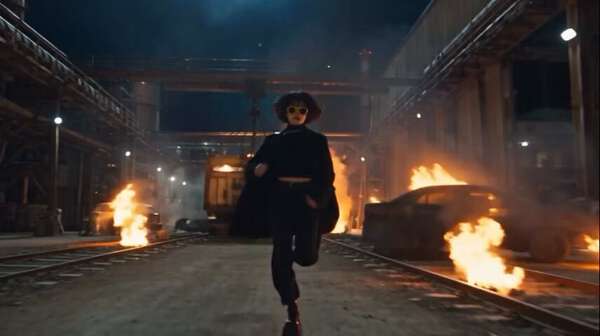
A cinematic, high-octane action scene featuring a stylish young woman wearing iconic round yellow sunglasses, a slick black coat, and heavy combat boots. She sprints dynamically th…
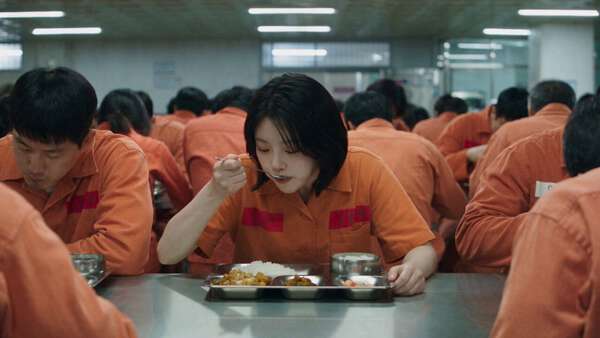
Create a 30-second ultra-photorealistic Korean zombie horror action sequence inside a crowded high-security Korean prison cafeteria during lunchtime. MAIN CHARACTER: A beautiful yo…
Duration: 17 seconds Aspect Ratio: 16:9 Style: Photorealistic live-action Korean fantasy comedy, cinematic VFX, realistic human movement. CHARACTER CONSISTENCY Female Character: A …
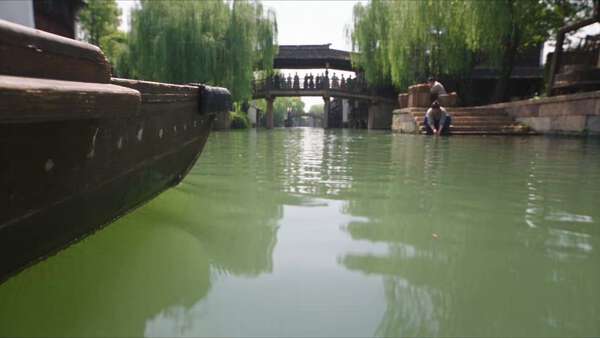
东方古装写实真人电影质感,白天,江南水乡河道:翡翠绿的河水、两岸垂柳与临水木楼、远处水车、淡淡炊烟;河道上方横着一座落座于湖面上的阁楼走廊:下层是木柱撑起的过水通道、上层是带栏杆的敞廊,行人凭栏而立,小船自其下层通道穿过。真人演员出演,真实皮肤、发丝、纱料与木船质感,水面反光与涟漪真实。画面中央是一条带竹篾篷的乌篷小船,顺水缓行。全片无配乐:开场两句诗是B立…
seedance2.5 1080p,30秒,爪哇宫廷古装写实真人电影质感,白天,江南水乡河道:翡翠绿河水、垂柳、临水木楼、水车、淡淡炊烟;河上横一座阁楼走廊,下层为过水通道、上层为敞廊。画面中央一条竹篾篷乌篷小船顺水缓行。真实皮肤、发丝、织物与水面反光。全片无配乐、无台词、无人声,仅有水声、橹声、衣料轻响与微风;无字幕。 【人数锁定】船上只有A、B、C三人,…
Create a cinematic Korean drama-style winter sequence featuring a beautiful young Korean woman with long, natural black hair, wearing an elegant beige wool coat, a bright red knitt…
Create a 30-second ultra-realistic 4K live-action travel vlog featuring three young Korean female friends camping in the beautiful mountains of South Korea. Authentic handheld camc…
Create a 15-second ultra-realistic 16:9 landscape video featuring the same naturally attractive 24-year-old Korean woman with long loose dark hair, minimal makeup, an oversized mar…
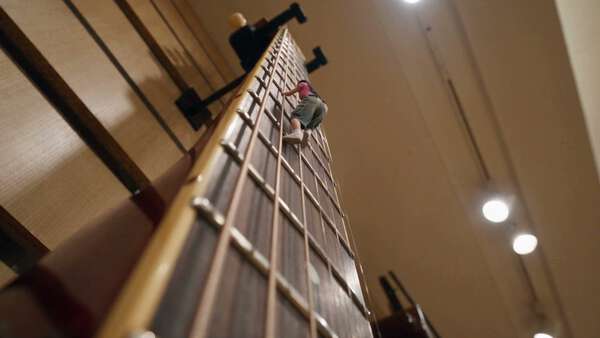
Create a 30-second photorealistic live-action miniature adventure featuring one athletic miniature woman at approximately 1 : 5 scale inside a massive modern musical instrument sto…