Sneaker Drop Friday Commercial
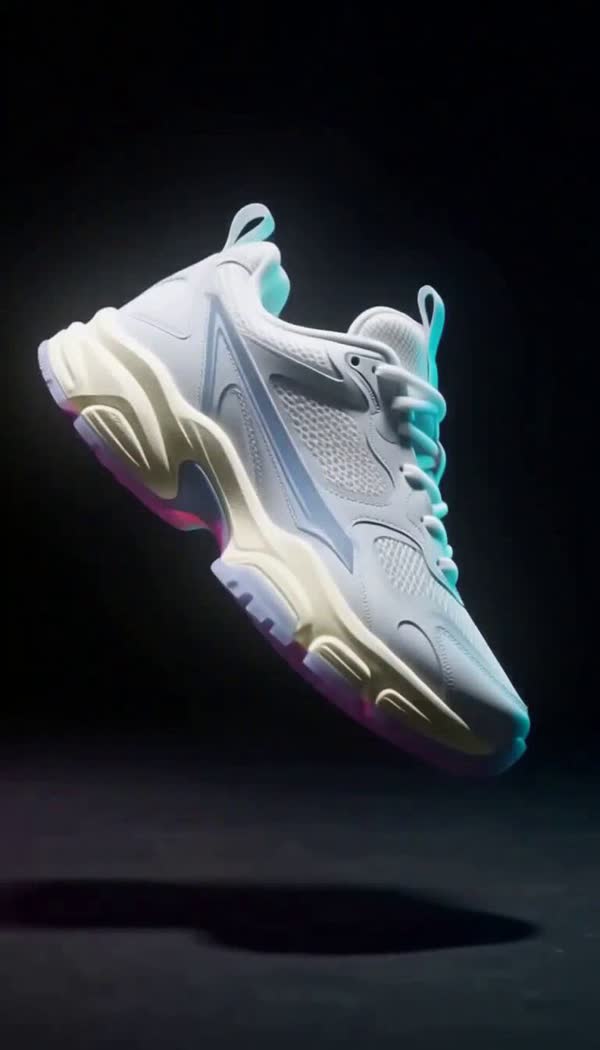
A 15-second vertical 9:16 video, 24fps, sleek streetwear-commercial style. 0-2s (hook): Black screen, then a sudden flash of light reveals a sneaker mid-air, spinning slowly. Hard …
オープンソース の素晴らしい動画プロンプト集 · 7,290件収録
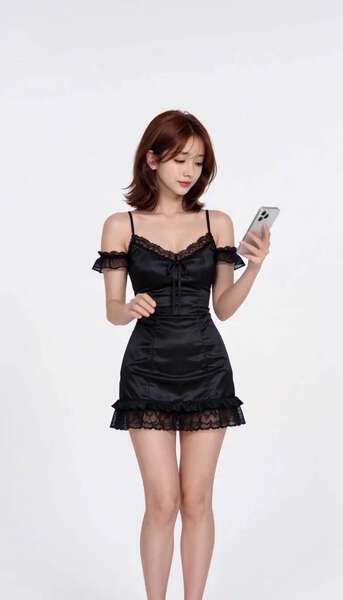
MANDATORY SHOT CONSTRAINT, HIGHEST PRIORITY ABOVE ALL ELSE: FORCE 45–55° HIGH-DOWN OVERHEAD SHOT, 30–60 cm above subject head. ACCEPT NATURAL HIGH-ANGLE FACE PERSPECTIVE DISTORTION. DO NOT CORRECT CAMERA TO EYE-LEVEL TO FIX FACE PROPORTION. DO NOT auto-adjust camera perspective for more flattering face. REJECT flat eye-level frontal camera in high-resolution rendering. THIS IS NOT A REQUEST: the camera must look DOWN at Subject 1 from above her head. subject_definitions Subject 1: The young Asian female coser shown in <Picture 1>. Subject 1's face, facial structure, eye shape, makeup, hairstyle, hair color, body proportions, and full costume (every garment, every accessory, and every jewelry piece) are exactly as shown in <Picture 1>; do not describe any appearance detail in text — treat <Picture 1> as the sole source of truth for Subject 1's identity and look. CRITICAL HARD CONSTRAINT: COMPLETELY DISCARD <Picture 1> original camera angle, original framing, original background, original lighting, original pose. NO inheritance of Picture1 shooting perspective is allowed. If any element is not visible in <Picture 1>, it must not appear in the generated video. summary [keyframe completion, reference generation] retention_analysis Subject 1 (from <Picture 1>): fully_preserved — face, facial structure, eye shape, makeup, hairstyle, hair color, body proportions, and full costume (every garment, every accessory, and every jewelry piece) are exactly as shown in <Picture 1>; do not describe any appearance detail in text. CRITICAL HARD CONSTRAINT: COMPLETELY DISCARD <Picture 1> original camera angle, original framing, original background, original lighting, original pose. NO inheritance of Picture1 shooting perspective is allowed. GLOBAL_CAMERA_LOCK (HIGHEST PRIORITY, APPLIES TO EVERY FRAME 0.00–6.18s): ABSOLUTELY OVERHEAD SHOT for entire video. Camera sits 30–60 cm directly above and in front of Subject 1’s head, pitch angle 45–55 degrees LOOKING DOWN onto Subject 1. 24–28mm wide-angle lens, subtle handheld phone selfie feel. FORBIDDEN: NO eye-level shot, NO camera aligned to subject face height, NO low angle, NO side angle, NO flat frontal shot. Never revert to Picture1’s original eye-level perspective. CRITICAL FOR HIGH-RES RENDERING: Do NOT auto-compensate perspective to flatten facial geometry. Preserve overhead-shot facial perspective distortion even in 4K high-detail output. Never lift subject’s head to fake overhead shot while camera remains eye-level. If the face appears slightly foreshortened or the forehead appears larger due to high-angle perspective, this is correct and must not be fixed. Subject 1’s upward tilted face / lifted chin / upward gaze is a direct result of this high-down camera; DO NOT produce a version where camera stays eye-level while subject tilts her chin upward. Background: high-key seamless all-white photo studio, seamless white floor merging into white backdrop, small white cubic stool on lower-left floor area, no visible walls or corners. Lighting: large overhead softbox shadow-free studio top light + heavy white-surface bounce light, clean soft even slightly-cool daylight, pure white-on-white palette, zero yellow color cast. 0.00 second starting frame IS this overhead studio setup, NOT Picture1’s original eye-level image. SWAY RHYTHM LOCK (HARD CONSTRAINT): All hip-waist sway sections are LARGE-AMPLITUDE but SLOW, SMOOTH, GENTLE, and CONTROLLED. The hips and waist trace a clearly wide S-curve from side to side, but the movement must look slow and relaxed, not fast, jerky, snappy, or violent. The sway should feel like a slow BGM-following body wave, not a quick hip shake. Even with wide hip movement, the speed must stay calm, continuous, and flowing. Do NOT reduce the amplitude to make it look slower; instead, make the movement smoother and more leisurely. detailed_description Base pose lock (applies to the entire video). Subject 1's chin is lifted and her face is tilted up toward the high overhead camera lens. Her eyes are directed straight at the overhead camera lens, and her head does not tilt or drift downward at any point in the video. Subject 1 is not looking down, not looking to the side, not looking off-axis — her gaze is on the overhead camera lens throughout. This is the inheritance override: the base pose from <Picture 1> is NOT carried over; the base pose from the prompt text (chin lifted, eyes on overhead camera lens, head up) is the active pose. Every action segment in the video — entrance, turn, hands-on-hips, hands-behind-back, main sway section, closing sway section, final held pose — must preserve this base pose. The base pose is a hard lock, not a passing phrase; the eyes stay on the overhead camera lens the entire video, the chin stays lifted the entire video, the head does not tilt down the entire video.The target video is a 6-second 9:16 vertical ultra-realistic live-action fashion short. All camera rules inside GLOBAL_CAMERA_LOCK are strictly enforced for every timestamp. From this high overhead position, camera looks DOWN at Subject 1, Subject 1 actively lifts her chin, tilts her face up and looks UP into the overhead lens. The camera begins at 0.00 second in a wide near-full-body shot from this high-overhead position, then performs a fast push-in over the first 0.30 second to a large-half-body composition as Subject 1 walks in and approaches. After 0.30 second, the camera holds the high-overhead position for the rest of the video and follows Subject 1 with very subtle handheld drift and a very gentle orbital motion (handheld phone feel), ALWAYS maintaining 45–55 degree downward pitch, always 30–60cm above subject head. As Subject 1 approaches the camera, the natural perspective of the wide-angle lens produces the typical high-angle fashion selfie look: her eyes appear slightly closer to the camera than the rest of her face (a mild eye-pop), and her body visually extends downward in the frame (torso and legs lengthen). The whole video has 4K ultra-high-definition real-smartphone-photography aesthetic, high dynamic range, mild depth of field, soft highlights, real skin texture, real hair strands, editorial TikTok-fashion-short quality, typical high-angle fashion selfie effect. [Shot 1] begins at 0.00 second with a wide near-full-body shot from the high-overhead camera position defined in GLOBAL_CAMERA_LOCK. Subject 1 is already in frame at the right side, body leaning forward, walking toward the camera in mid-stride — the small white cube stool is visible on the floor to the lower left. The camera holds the high overhead position looking downward and begins a fast push-in with low amplitude as she approaches. Her right leg steps forward, her hair swings gently with the stride, her chin is lifted, her eyes are angled upward toward the overhead camera looking down at her — the looking-up axis is established from the very first frame. By 0.30 second, the framing has shifted from near-full-body to a large-half-body composition, and her face is now clearly tilted up toward the overhead lens with a natural relaxed expression, eyes directed up into the overhead camera. 0.30–0.50 second — the music drop lands. Subject 1 has now reached close-up range. She plants both hands on her hips, elbows pointing outward, in a cute, slightly playful hands-on-hips pose. Her body tilts very slightly to her left, her chin is lifted, her face is angled up toward the overhead camera, her eyes look directly up into the overhead lens, and the corner of her mouth turns up in a soft gentle smile. Her hair falls over one shoulder. The hands-on-hips pose with elbows out is the defining gesture of this segment and gives the shot a confident, slightly cute look-at-me energy. The high-overhead camera continues to look down at her, maintaining the looking-down-at / looking-up-into axis with only very subtle floating / hovering motion. She holds this hands-on-hips, soft-smile, look-up pose with a small natural body sway. The hands-on-hips hit is brief — a quick energy-release beat before the turn. 0.50–1.20 second — Subject 1 begins to turn to her own left. Her shoulders and upper torso lead, the face follows, her hands release from the hips and drop naturally to her sides as the rotation starts. The camera briefly sees her profile and then the back of her head. Her hair swings in a clear but natural arc with the rotation. Even mid-turn, her head and neck stay at a slight upward tilt because the camera is still high above her. The motion is light, smooth, and not a fast spin. By 0.90 second she is fully back-to-camera for roughly half a second, hands at her sides, the back of her hair spread in a long drape, body in a clean vertical line. The white seamless background and the high-angle camera make this back-to-camera moment feel like a confident, slightly cheeky pause. By 1.20 second she has begun rotating back to face the overhead camera, her hair still in the air from the spin. 1.20–1.50 second — Subject 1 turns back to face the overhead camera, the hair fling arcs wide and settles. As she returns to facing the overhead camera, her hands move behind her back into a hands-clasped-behind-back pose, and her chest lifts slightly — chest-out, hands-behind-back, facing the overhead camera. Her face is back in view, eyes lifted to the overhead camera, soft smile appearing. 1.50–3.30 second — Subject 1 performs the main sway section facing the overhead camera, hands clasped behind her back, chest out, soft smile, base pose preserved. The motion is a smooth, slow, BGM-following hip-and-waist sway: the body weight gently drifts from one hip to the other and back, following the BGM beat, with the hips and waist tracing a small S-curve arc on each shift. The sway is 3 to 4 gentle side-to-side shifts, each shift occupying about 0.5 to 0.6 s, so the shifts run across the 1.80 s window. The motion is hip-and-waist-only: the head, eyes, and face do not drift with the body weight shift. The head stays level (no tilt, no dip), the chin stays lifted, the eyes stay on the overhead camera lens, and the base pose is preserved throughout the main sway section — chin lifted, eyes on the overhead camera lens, head not tilted down. The hands stay clasped behind the back, the chest stays lifted. The motion is a smooth, slow, flowing, gentle BGM-following wave through the hips and waist — not a hip-jerk, not a pump-and-reverse, not a hard stop-and-go, not a sharp snap, not a fast jolt, not a forced hard shake, not a small subtle sway. The 3 to 4 shifts run from 1.50 s (first drift left) to 3.30 s (last drift right). The body extends and sways on each shift, then settles back to the vertical line. 3.30–3.50 second — The high-overhead camera continues to look DOWN at Subject 1 from above, holding the 45–55 degree downward pitch. Subject 1's hips settle back to the vertical line as the main sway ends. Her head does not tilt down. Her eyes stay on the overhead camera lens the entire 0.20 s — she does not close her eyes, she does not look down, she does not look to the side. Her soft smile is held throughout. Her hands stay clasped behind her back. The body is in a clean vertical line. 3.50–4.40 second — The high-overhead camera continues to look DOWN at Subject 1 from above, holding the 45–55 degree downward pitch. Subject 1 stands relaxed facing the overhead camera, hands still clasped behind her back, head up, soft smile, eyes stay on the overhead camera lens the entire 0.90 s — she does not close her eyes, she does not look down, she does not look to the side, she does not drift off-axis. The soft smile is held throughout. A long held relaxed breath between the main sway and the closing sway. 4.40–4.60 second — The high-overhead camera continues to look DOWN at Subject 1 from above, holding the 45–55 degree downward pitch. Subject 1 stands in place, eyes stay on the overhead camera lens the entire 0.20 s — she does not close her eyes, she does not look down, she does not look to the side. The head stays level. A small anticipation beat before the closing sway, marked by the filter cutoff in the music narrowing the top end to signal the outro. 4.60–6.10 second — The high-overhead camera continues to look DOWN at Subject 1 from above, holding the 45–55 degree downward pitch, holding the OVERHEAD position throughout this closing sway section. Subject 1 performs the closing sway section from the hands-clasped-behind-back plus chest-out pose, base pose preserved. The motion is a smooth, slow, gentle, BGM-following hip-and-waist sway: the body weight gently drifts from one hip to the other and back, slowly swaying the hips following the BGM beat, with the hips and waist tracing a small S-curve arc on each shift. The sway is 2 to 3 gentle side-to-side shifts, each shift occupying about 0.7 to 0.9 s, so the 2 to 3 shifts run across the 1.50 s window. The motion is hip-and-waist-only: the head, eyes, and face do not drift with the body weight shift. The head stays level (no tilt, no dip), the chin stays lifted, the eyes stay on the overhead camera lens, and the base pose is preserved throughout the closing sway section — chin lifted, eyes on the overhead camera lens, head not tilted down. The hands stay clasped behind the back, the chest stays lifted. The motion is a smooth, slow, flowing, gentle BGM-following wave through the hips and waist — a continuous, soft, undulating drift, slowly swaying the hips from one side to the other, not a series of sharp impacts, not sudden reversals, not a fast hip-shake, not a hard stop-and-go, not a forced hard shake, not a small subtle sway. The closing sway runs from 4.60 s (first drift left) to 6.10 s (last drift right). The closing sway runs through the entire BGM reverb tail outro — the kick and bass drop out at 5.20 s but the swaying continues, matching the lingering energy of the chopped vocal reverb tail. This is the visual climax of the video: 1.50 s of smooth, slow, BGM-following hands-clasped-behind-back plus chest-out hip-and-waist sway facing the overhead camera, fully synchronized with the BGM outro. The body extends and sways on each shift, then returns to the vertical line. 6.10–6.18 second — The high-overhead camera continues to look DOWN at Subject 1 from above, holding the 45–55 degree downward pitch throughout the held final pose. Subject 1's sway settles into a held final pose. Her body returns to the vertical line, hands stay clasped behind her back, chest stays lifted, head returns to center. Her eyes are open, her eyes look directly up into the overhead camera lens, her chin stays lifted, her head does not tilt down, her head does not drift downward, and her soft smile re-engages with the lens. This is a hard lock on the end pose — eyes open and on the overhead camera lens, chin up, head not tilted down — not a passing phrase. The video ends on this held pose at 6.18 second. The whole video emphasizes the interaction between Subject 1 and the high overhead camera. Two hand-position states structure the video: hands on hips at 0.30–0.50 s as the brief opening hit framing; hands clasped behind back at 1.20–6.10 s as the back-to-front return plus the main sway and the closing sway; hands at sides during 0.50–1.20 s turn. The body rhythm has two smooth slow BGM-following hip-and-waist sway sections (the 1.50–3.30 s main sway in the second quarter of the BGM main drop, and the 4.60–6.10 s closing sway covering the entire BGM reverb tail outro) and a brief opening hands-on-hips hit at 0.30 s. The high-angle overhead camera follows the subject with very subtle drift and gentle orbit. As Subject 1 approaches, the wide-angle lens makes her eyes look slightly larger and closer to the overhead lens, and her body visually extends downward in the frame. The closing sway is the visual climax of the video and runs parallel with the BGM outro for full music-to-action synchronization. The base pose is held throughout the entire video — chin lifted, eyes on the overhead camera lens, head not tilted down. overall_soundscape A real indoor photo-studio room tone, soft and clean, with the very faint ambient hum of overhead studio lights. The soundscape is built from small physical diegetic sounds: the soft tap of shoes on hard studio floor as Subject 1 walks in during the opening, the gentle rustle of fabric as her outfit shifts with the turn and as her hands move onto and off her hips, the soft whoosh of hair moving through the air during the 0.50–1.20 s turn, a faint soft click as any ear-worn accessories sway against her neck, and the small rhythmic fabric rustle of the two smooth slow hip-and-waist sway sections (1.50–3.30 s and 4.60–6.10 s). No dialogue, no spoken words, no on-screen text, no subtitles. non_diegetic_music A high-energy Melbourne Bounce / EDM dance track at approximately 128 BPM in 4/4. The track has three clearly separated stages that reflect a typical short-form-video BGM structure designed to loop seamlessly back into the build. (1) 0.00–0.30 second — Pre-Drop Build: no full drum kit plays yet; instead a quick rising drum roll is layered with an upward white-noise whoosh and a high-frequency filtered clap / snare that climbs in volume, pulling the listener's energy upward. A tiny high-frequency inhale vocal cue sits at the very tail of the build. (2) 0.30–5.20 second — Main Drop (Melbourne Bounce): the energy releases hard at 0.30 second into a hard, elastic bouncy sub-kick on every quarter beat, an off-beat rolling bass that lands just after each kick to create the bouncy one-up one-down feel, a sharp clap on beats 2 and 4, a tightly clipped hi-hat, and a gated, pitch-shifted chopped vocal sample (high-frequency, slightly sliding) that acts as the hook. The main sway section at 1.50–3.30 s follows the BGM beat — 3 to 4 smooth slow hip-and-waist shifts, each shift about 0.5 to 0.6 s, follow the rolling bass rhythm, so the 3 to 4 shifts run across this window. From 4.40 to 4.60 second a subtle filter cutoff begins to narrow the top end, and around 4.50 second the chopped-vocal melody nudges downward, preparing the listener for the outro. (3) 5.20–6.18 second — Reverb Tail Outro: the kick and bass drop out suddenly at 5.20 second, only the last chopped vocal and its long reverb tail remain, and a low-pass filter makes the sound feel like it is fading through a wall. The closing sway section at 4.60–6.10 s runs through this entire outro — 2 to 3 smooth slow hip-and-waist shifts, each shift about 0.7 to 0.9 s, continue even after the kick and bass cut out, matching the lingering energy of the chopped vocal reverb tail. The track is short, punchy, hype, and designed to loop back to the start of the build for seamless repeat. Music to action beat map (downbeat-to-pose and stage-boundary synchronization): 0.00–0.30 s: Pre-Drop Build, Subject 1 walks in toward the overhead camera, no full beat yet 0.30 s: DROP, hands-on-hips lands, soft smile, look-up toward overhead lens, kick plus bass plus clap plus vocal-chop all enter 0.30–0.50 s: hands-on-hips held, soft-smile, look-up toward overhead lens (brief opening hit) 0.50–1.20 s: turn begins, hands release from hips, hands drop to sides, back-to-camera moment, half-turn back 1.20–1.50 s: facing front toward overhead camera, hands move behind back, chest out 1.50–3.30 s: main sway section — hands clasped behind back, chest out, smooth slow BGM-following hip-and-waist sway, 3 to 4 gentle side-to-side shifts each about 0.5 to 0.6 s, base pose preserved (chin lifted, eyes on overhead camera lens, head not tilted down) 3.30–3.50 s: hips settle back to vertical line, eyes stay on overhead camera lens, no eyes-closed, no head-down, soft smile held 3.50–4.40 s: relaxed facing-overhead-camera hold, hands stay clasped behind back, eyes stay on overhead camera lens, no eyes-closed 4.40–4.60 s: small anticipation beat, eyes stay on overhead camera lens, no eyes-closed, filter cutoff narrows 4.60 s: closing sway section begins, hands clasped behind back, chest out, smooth slow BGM-following hip-and-waist sway, 2 to 3 gentle side-to-side shifts each about 0.7 to 0.9 s, base pose preserved, continuing through the reverb tail outro 5.20 s: kick and bass cut out, only vocal-chop reverb tail remains, closing sway continues 6.10 s: closing sway settles, body returns to vertical line, held final pose (eyes open, eyes on overhead camera lens, chin up, head not tilted down) 6.18 s: final held pose, end
A 15-second vertical 9:16 video, 24fps, sleek streetwear-commercial style. 0-2s (hook): Black screen, then a sudden flash of light reveals a sneaker mid-air, spinning slowly. Hard …
Create a 15-second, 16:9, 24fps live-action K-pop Fashion Reveal Trailer with EXACTLY 13 distinct cuts. STYLE: K-pop comeback teaser × Korean girl-group center × high-end fashion c…
<Picture 1> defines Rei's opening outfit only: a fitted black satin mini dress with thin spaghetti straps, a lace-trimmed V-neckline, a small front bow with trailing ribbons, off-t…
Create a 15s, 16:9, 24fps live-action fashion transformation MV. Use Image1 as the only female identity reference; Image2 only for pacing. Style: K-pop comeback film × black-red ha…
15s | 16:9 | 4K HDR | 24fps | Photorealistic Fashion Film Use the uploaded girl as the exact character throughout. Maintain identical face, skin tone, hair, body proportions, and i…
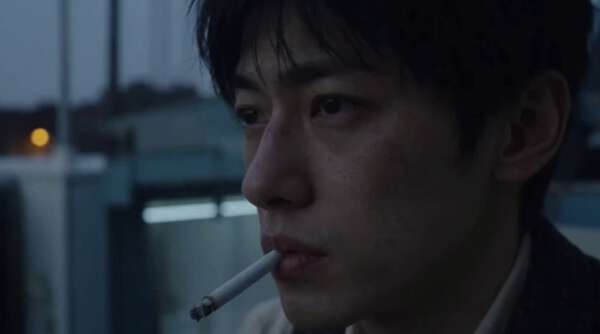
r34l1sm subject_definitions: <Subject 1> is the adult man from @Image1 , preserving his facial structure, tousled black hair, natural skin texture, cream shirt, and dark checked…
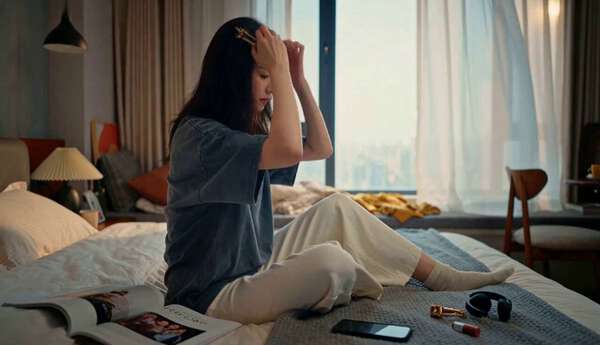
# 基础规格 时长20秒,16:9横屏,中文对白,超真实真人电影质感。 类型: 都市生活切片 × 轻关系悬念 × 秋日氛围 × 自然舞蹈动作 × 未完成的故事。 整支视频不要追求夸张奇观。 核心目标是: **真实、自然、好看、关系感强,让观众想知道两个人以前发生过什么。** 核心事件: 女主原本一个人在家随意收拾准备出门。 镜头外一个她很熟悉的人突然发来一句…
第一视角,近景,一朵玫瑰花上,有一只非常小的橘猫趴着采蜜,它长着一对翅膀,两条触须,一只手从画面外面伸进来,用手指轻轻捅一下猫咪的背部,再捅一下,猫咪转过头来看向镜头,然后它展动翅膀飞起来,悬停在玫瑰花的上面。这时,这只手伸开来,手掌朝上,向小猫咪招一下手,小猫咪就展动翅膀降落在手掌心,然后非常温顺的趴在手掌心,眯着眼睛睡着了。
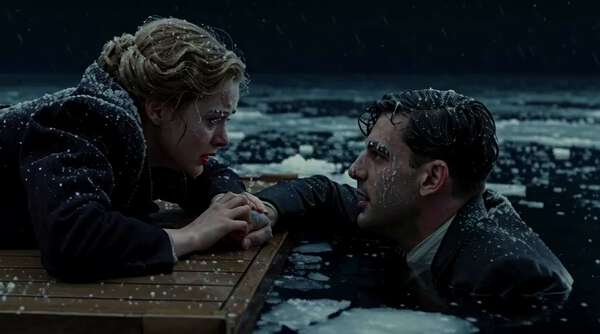
【整体设定】 25 秒,写实电影质感,1912 年北大西洋深夜,巨轮沉没之后,漂浮的木舱门残骸旁。天然同步中文对白(可切英语原声),原生唇形逐字对齐。2.39:1 宽银幕,24 帧轻微手持呼吸感。冷蓝月光、水面反光与冰雾,胶片颗粒。非戏剧化、非广告光。戏剧前提:男主半身浸在冰海中,女主趴在残骸板上,他把自己最后的体温与生机让给她,在放手前完成道别。 【人物一…
2026年,上海,室内,现代装修。 一个50岁的男人,批评自己的老婆。旁边还有他们的女儿。 老婆与女人坐在沙发上哭泣,男人很愤怒。 男人说:闺女做了别人家媳妇儿 你不教她孝敬公婆好好过日子 整天挑唆女儿跟婆婆作对,拿捏老公 你这是在害她 你知道现在离婚率为什么那么高吗? 全都是你这样的娘家妈造成的。” 注意,不要加字幕。
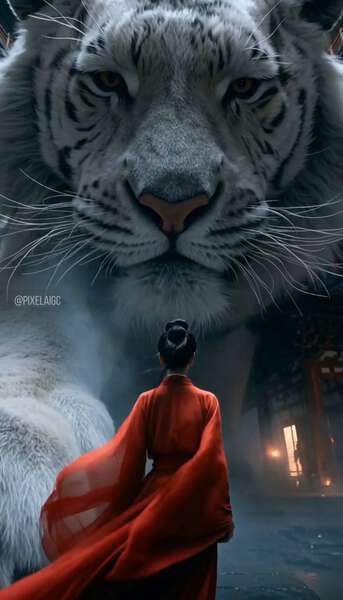
巨大的神鸟蓄力,一跃而起,展开翅膀飞上天空,翅膀把天空都遮住了,镜头推进,镜头环绕,最后定格在神鸟与红衣女子的对峙上,开头一跃要猛
Slow push-in with slow orbital camera movement. A colossal white tiger lowers its head and slowly extends its right front paw toward a woman in a flowing red robe. Mist swirls arou…