Watch Tiny Workers Build The Golden Gate
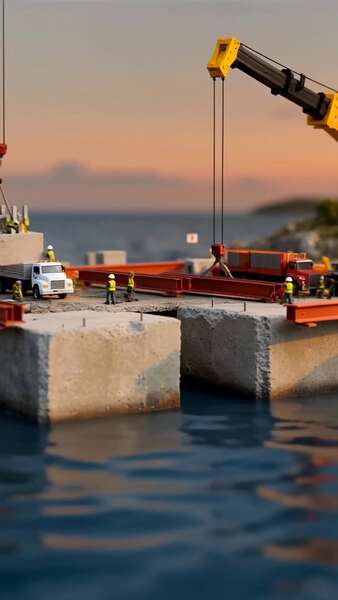
Create a 15-second ultra-realistic miniature construction time-lapse video, 16 : 9 4K HDR, 24fps, cinematic macro photography. CONCEPT: Tiny construction workers rapidly build an a…
An open-source collection of awesome video prompts. · Collected 6,491 prompts
Japanese full-color anime style, theatrical anime quality. Bright atelier, wooden desk, round embroidery hoop with white fabric. Around it: red and gold threads, spools, narrow ribbons, needle, thread scissors, small beads. Daytime natural light, clean white-and-wood space, shallow depth of field.
Keep the desk, embroidery hoop, fabric, thread, and needle spatially clear in the first and middle sections. The thread moves three-dimensionally around the hoop, not only on the fabric. When it moves, add subtle glowing afterimages, light trails, and tiny particles. Effects support the thread; the thread stays visible.
The goal is not to stitch the reference image step by step. Build anticipation with thread, needle, hoop, and fabric movement. In the end, the completed embroidered cloth becomes the final object. The reference image appears on the surface of that finished cloth. Do not show the reference image full-screen or as a standalone flat picture. Keep fabric edges, wrinkles, embroidery texture, and tapestry presence visible until the end.
Reference image: front-facing or near-front upper-body portrait, preferably an attractive anime-style woman. Clear face, hair, eyes, costume outline, simple background, centered subject.
Timing: 0–2s: Show the hoop, white fabric, thread spools, and needle on the desk. One red thread tip trembles. 2–4s: The red thread unwinds from a spool. The needle briefly touches the fabric. 4–6s: The thread jumps into the air, crosses in front of the hoop, and draws an elegant arc with a subtle glowing trail. 6–8s: Multiple threads cross and twist like ribbons around the hoop. Insert a brief needle-piercing-fabric shot. Do not repeat the same motion. 8–10s: Floral and decorative embroidery patterns increase on the cloth. Make clear that the finished object is the cloth. 10–12s: The embroidered cloth gently lifts, released from the hoop or spreading in the air. Thread trails and light create the transition. 12–13s: The cloth sways and hangs on a wall, or spreads in the air as a tapestry. Show fabric edge, wrinkles, and embroidery thickness. 13–15s: The reference image fades naturally into the completed embroidered cloth surface. Keep fabric texture visible. No full-screen reference image. No large face close-up. End with the full tapestry in a mostly still shot.
Cuts: extreme close-up, macro overhead, diagonal close-up, low angle, side macro, medium shot, fixed front shot. Fast, sharp editing. Each phase has a different role: spool, needle, thread dance, embroidery growth, cloth lift, tapestry reveal. Do not move into an abstract space.
Sound: soft, elegant short-anime-style BGM from start to finish. Do not stop the BGM suddenly. Add subtle thread rubbing, thread cutting through air, needle touching fabric, and soft cloth movement. No loud sound effects.
Negative: no text, logo, watermark. Do not show the reference image as a real person, full-screen image, or standalone flat image. Do not paste a normal image inside the hoop. Do not end with only a face close-up. Do not repeat the same thread motion. Do not make it effect-only. Do not let glow hide the thread. Always end on the full embroidered cloth or tapestry with visible fabric edges, wrinkles, and embroidery texture.
Create a 15-second ultra-realistic miniature construction time-lapse video, 16 : 9 4K HDR, 24fps, cinematic macro photography. CONCEPT: Tiny construction workers rapidly build an a…
The camera begins low near the surging ocean waves, close to the surface as water crashes violently against the jagged rocks. It then rises upward in a smooth cinematic motion alon…
Create a cute, funny, ultra-realistic 3D animated cinematic video set on a frozen lake surrounded by beautiful snow-covered pine trees and majestic snowy mountains. A chubby, adora…
> Scene 1 (0:00 - 0:09): Vertical 9:16 video, 3D animated cute style. A hand drops a clear ice cube into a boiling spicy hot pot with red chili broth, causing four tiny sweating 3D…
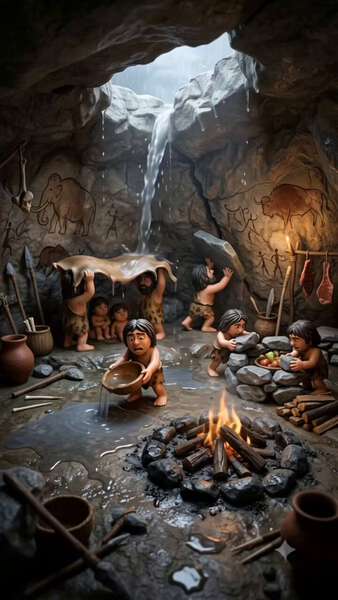
3D animated stylized video, miniature claymation aesthetic. A giant realistic human hand intervenes to assist a small tribe of cute, cartoonish cavemen inside a cave environment. *…
An adult celestial swordswoman with long platinum hair, a voluptuous regal silhouette and luminous gold-and-white armor descends into a battlefield from a ring of light as corrupte…