Military Helicopter Canyon Dragon Rescue
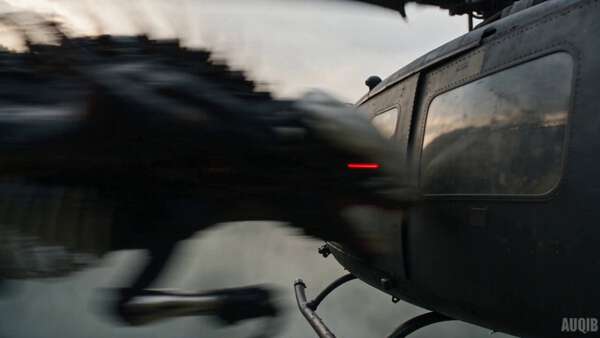
好莱坞电影级军事怪兽战斗短片,30秒,1080p。开场立即进入恐怖袭击,不做缓慢铺垫。整体呈现真实实拍与实体特效质感。一架军用直升机在黄昏时分低空穿越茂密丛林峡谷,机上共有四名成年女性。袭击期间采用具有真实惯性的手持摄影,怪物完整现身后穿插空间关系清晰的广角镜头。低饱和军事色调,自然现场音贯穿全片,紧张配乐在第一次撞击时立即进入。 【预设角色与服装锁定】 -…
An open-source collection of awesome video prompts. · Collected 6,491 prompts
Use the provided 16-panel storyboard sheet @[storyboard ref] as the direct sequential visual keyframe reference for the entire video. Follow the exact 16-beat progression and pacing structure from the storyboard. Preserve the original choreography flow, framing logic and motion escalation while expanding the action with richer animation detail between storyboard poses.
Pure white background with no rendered environment, like animated manga sketches drawn on blank paper space. Keep the camera language, composition and rough storyboard energy intact, but render the swordsman in vibrant high-contrast anime colors while all surrounding elements remain minimal and sketch-like.
Character design should feel premium anime sakuga quality with saturated cinematic colors, expressive lighting accents and dynamic shading. Hair, clothing and sword glow should carry strong color identity while motion lines, debris, dust and environmental reactions stay mostly monochrome black sketch elements with occasional soft accent tones.
Do not animate or include storyboard annotations, arrows or written notes. They are reference-only.
A lone anime swordsman performs an impossibly fluid single-blade combat routine with nonstop escalating momentum. Add additional in-between animation, cloth physics, blade recoil, footwork detail, camera inertia and atmospheric sketch particles not explicitly shown in the storyboard while staying faithful to the original sequence.
Hyper-dynamic anime cinematography with whip pans, orbit shots, fisheye distortion, snap zooms, low-angle tracking and exaggerated perspective. The sword must remain visually readable through bright colored slash arcs, glowing impact trails and abstract energy shapes. Heavy motion smears, speed lines and sketch debris throughout. Continuous escalation across all 16 beats ending with one overwhelming slow-motion finishing slash that fractures the white sketch space itself.
好莱坞电影级军事怪兽战斗短片,30秒,1080p。开场立即进入恐怖袭击,不做缓慢铺垫。整体呈现真实实拍与实体特效质感。一架军用直升机在黄昏时分低空穿越茂密丛林峡谷,机上共有四名成年女性。袭击期间采用具有真实惯性的手持摄影,怪物完整现身后穿插空间关系清晰的广角镜头。低饱和军事色调,自然现场音贯穿全片,紧张配乐在第一次撞击时立即进入。 【预设角色与服装锁定】 -…
CAMERA: Stay close to action using ground-level tracking, face push-ins, short body arcs, Dutch tilts, fists/boots crossing foreground, camera lowering with rolls and sudden extrem…
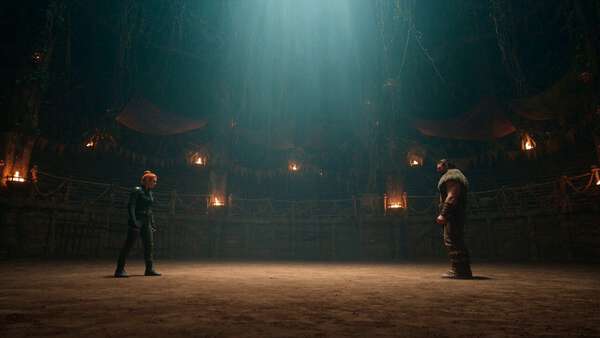
Ultra-realistic fantasy action blockbuster, 30-second cinematic sequence. Shot on ARRI Alexa 35 with anamorphic lenses, dynamic tracking, elegant orbits, aggressive push-ins, drama…
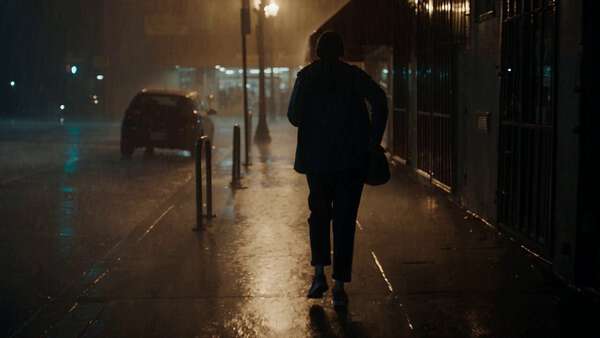
Create a 30-second cinematic, ultra-realistic live-action video set on a rainy city street at night, with wet roads reflecting streetlights and passing car headlights. Show a perso…
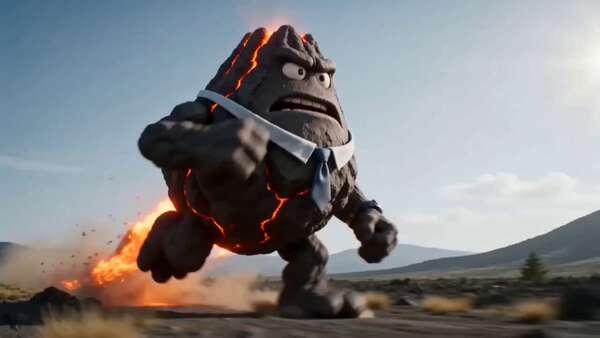
A giant volcano wearing a tiny necktie sprints across landscapes at impossible speed. Lava trails behind like sweat. It checks a wristwatch repeatedly. Entire countries watch in co…
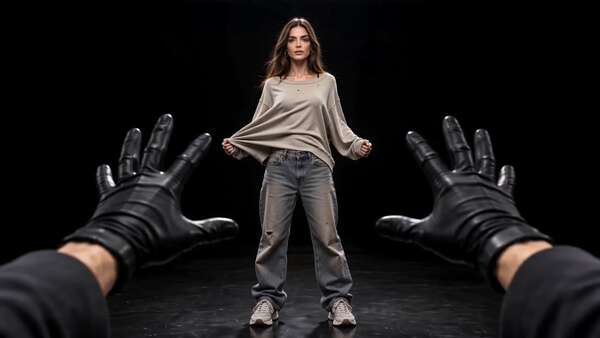
Create a 10-second photorealistic luxury fashion commercial, 16:9, based on the reference storyboard. Pure black infinite studio, STRICT first-person POV, centered full-body framin…