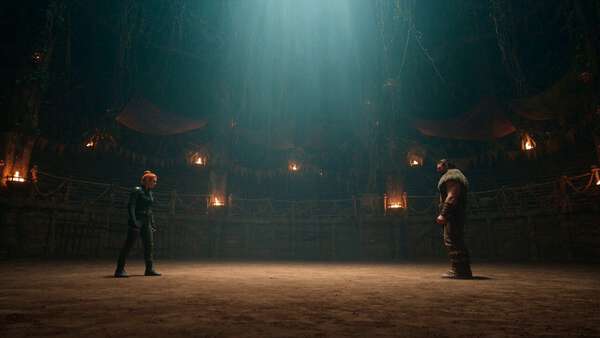
Muscle Warrior Arena Combat
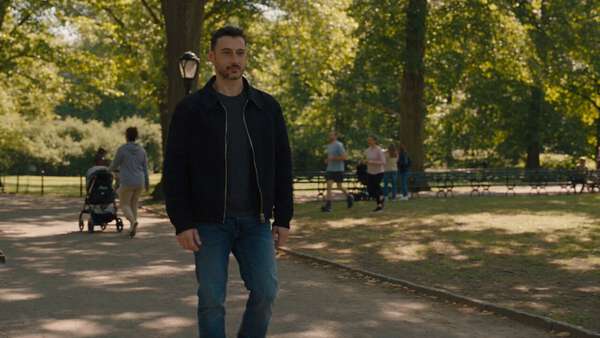
CAMERA: Stay close to action using ground-level tracking, face push-ins, short body arcs, Dutch tilts, fists/boots crossing foreground, camera lowering with rolls and sudden extrem…
An open-source collection of awesome video prompts. · Collected 6,491 prompts
At 0 to 2 seconds: Wide establishing shot of a moonlit bamboo forest clearing at night, thick mist rolling across the mossy ground, pale blue moonlight streaming through the dense canopy above. The reference shinobi character walks slowly into frame from the right side, silent on the moss, stopping in the center of the clearing. He draws his katana from his back sheath in one smooth continuous motion. Seven enemy shinobi silhouettes in dark crimson and deep indigo robes emerge from the surrounding trees, encircling him in a wide perfect ring, each carrying a different weapon — katana, twin kamas, kusarigama with chain, naginata polearm, ninjato, paired sai, tetsubo war club. Camera begins a slow circular dolly at low angle, establishing the circle formation.
At 2 to 3 seconds: Rapid cross-cutting between three tight close-ups — the reference shinobi's eyes narrowing behind his mask wrap, the edge of an enemy katana catching a blade of moonlight, a kusarigama chain tightening with a subtle pull. Heavy motion blur between each cut. The tension locks into place.
At 3 to 7 seconds: The seven enemies charge inward simultaneously from all directions. The reference shinobi explodes upward in one fluid violent motion, launching into a full aerial backflip. He spins a complete 360 degrees mid-air, his katana extended horizontally at chest height, the polished curved blade catching moonlight through the mist. His black shozoku robes and sash ribbons trail behind him, twisting gracefully with the rotation, the hood fluttering. As he spins, the katana cuts cleanly through all seven enemies in perfect sequence, each strike landing at neck or chest level. Dark red mist sprays outward in parabolic arcs following the blade's trajectory, droplets suspended in the cold night air. The camera orbits around him in perfect sync with his spin, keeping him locked as the center of the frame while the bamboo forest blurs radially behind him. Extreme slow-motion at 20 percent speed throughout the entire spin sequence. His mask, hood, robes, and katana remain absolutely identical to the reference character throughout the rotation.
At 7 to 8 seconds: Speed ramps back toward normal as the shinobi lands in a perfect low crouch, katana extended to one side, fallen leaves and mist bursting outward from the landing impact. Behind him, the seven enemy bodies begin falling backward in near-perfect unison, their robes fluttering as they collapse, still suspended in slow motion.
At 8 to 10 seconds: The reference shinobi slowly rises from his crouch, katana hanging loosely at his side. A single drop of dark liquid falls from the blade's tip in slow motion. Camera pushes in slowly from low angle as moon rays pierce through the bamboo canopy behind him, scattered leaves and pollen particles drifting through the cold shafts of light. The seven bodies finish collapsing onto the mossy ground around him, silent. He stands motionless, katana at his side, breath visible as a thin pale cloud in the cold air.
Cold pale blue moonlight cutting through thick bamboo forest mist, drifting particles of pollen and dust, disturbed leaves on every impact, reflective moisture on the moss, distant torii gate silhouette barely visible through the trees. Deep desaturated blue-black and forest-green color palette with dark crimson isolation on enemy robes only, ink- painting cinematography, natural organic film grain, shot on ARRI Alexa with anamorphic 40mm lens at f/2.0. Reference the visual style of Kurosawa, Miike, and Zhang Yimou — silent, mythic, final-stand atmosphere. 9:16 vertical composition throughout.
Critical character consistency: The main shinobi must remain absolutely identical to the reference character image in every single frame — same mask wrap, same hood, same robe folds, same sash, same bracers, same katana design, same build, same posture style. Do not alter, redesign, or morph the character at any point, in any lighting, from any angle. The seven enemies retain their distinct weapons and robe colors throughout. No text, no subtitles, no watermarks, no Western-style elements.
CAMERA: Stay close to action using ground-level tracking, face push-ins, short body arcs, Dutch tilts, fists/boots crossing foreground, camera lowering with rolls and sudden extrem…
Ultra-realistic fantasy action blockbuster, 30-second cinematic sequence. Shot on ARRI Alexa 35 with anamorphic lenses, dynamic tracking, elegant orbits, aggressive push-ins, drama…
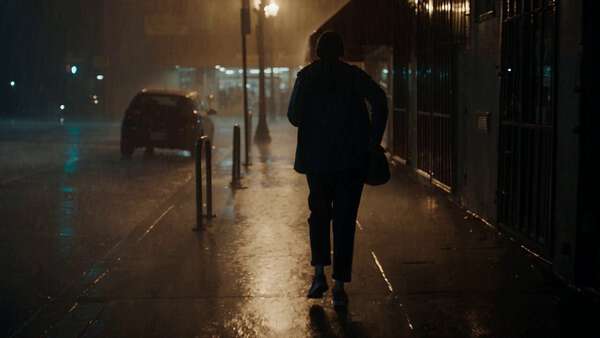
Create a 30-second cinematic, ultra-realistic live-action video set on a rainy city street at night, with wet roads reflecting streetlights and passing car headlights. Show a perso…
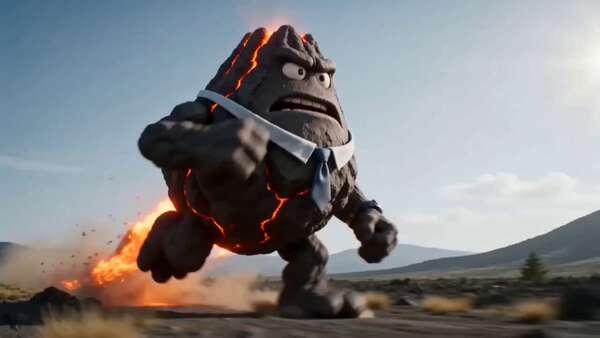
A giant volcano wearing a tiny necktie sprints across landscapes at impossible speed. Lava trails behind like sweat. It checks a wristwatch repeatedly. Entire countries watch in co…
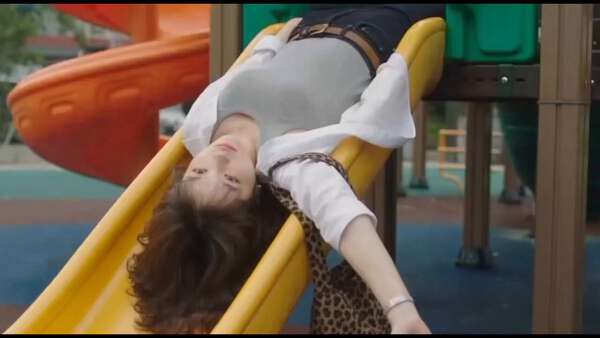
Created a video of a beautiful Korean girl having a playful, dreamy day at a colorful outdoor playground. She wears a casual white shirt, dark jeans, sneakers, and carries a stylis…
Create a 15-second ultra-realistic luxury skincare commercial featuring an elegant glass jar labeled “AQUA LUXE – DEEP HYDRATION” in a cool blue, refreshing environment. Start with…