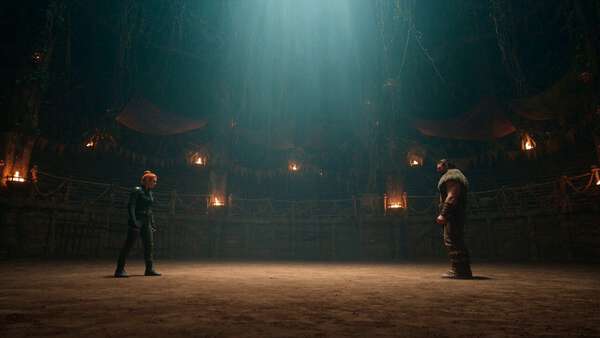
Muscle Warrior Arena Combat
CAMERA: Stay close to action using ground-level tracking, face push-ins, short body arcs, Dutch tilts, fists/boots crossing foreground, camera lowering with rolls and sudden extrem…
オープンソース の素晴らしい動画プロンプト集 · 6,491件収録
Alien sky above a glowing planet: two massive capital ships in a high-speed orbital duel, constantly repositioning, never stationary, supported by a small wing of elite fighters. Combat is tactical, fast, and asymmetric.
Wide orbital shot: both ships curve along different trajectories around the planet, never aligned, trading long-range fire across distance.
Dynamic sweep: camera arcs with one ship as it rolls to present shielded sections, deflecting incoming fire while returning calculated shots.
Cut across space: the opposing ship accelerates laterally, changing angle, forcing shots to miss or glance off shields.
Fighter deployment: small units launch mid-maneuver, already compensating for velocity, diving toward predicted intercept points.
High-speed tracking: camera follows a fighter cutting diagonally across the battle, threading between long-range beams and debris.
Near-miss moment: a capital ship's main weapon fires slightly off-target due to motion, the beam slicing past and grazing structure instead of a direct hit.
Tactical shift: one ship uses the planet's curvature, dipping lower into atmosphere glow, partially obscured, forcing the other to adjust trajectory.
Precision breach: fighters exploit a brief shield misalignment during a turn, striking a localized section without stopping the flow of battle.
Damage response: the hit ship doesn't stall; it rolls, vents energy, and accelerates away, stabilizing while still firing backward.
Final escalation: both ships now on intersecting but offset paths, firing continuously while moving at high speed, the battlefield stretching across space instead of collapsing into a single point.
No hovering, no direct standoffs, constant motion, realistic spacing, tactical positioning, momentum-driven combat, cinematic but physically grounded, high-detail sci-fi realism.
CAMERA: Stay close to action using ground-level tracking, face push-ins, short body arcs, Dutch tilts, fists/boots crossing foreground, camera lowering with rolls and sudden extrem…
Ultra-realistic fantasy action blockbuster, 30-second cinematic sequence. Shot on ARRI Alexa 35 with anamorphic lenses, dynamic tracking, elegant orbits, aggressive push-ins, drama…
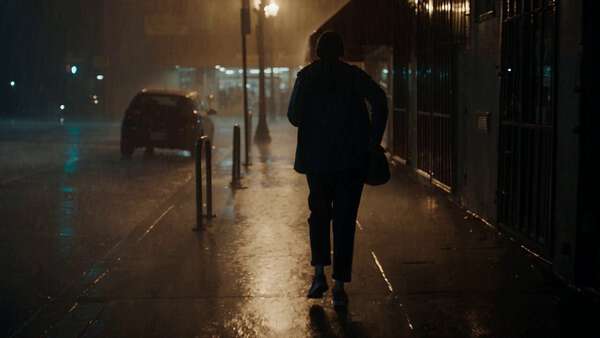
Create a 30-second cinematic, ultra-realistic live-action video set on a rainy city street at night, with wet roads reflecting streetlights and passing car headlights. Show a perso…
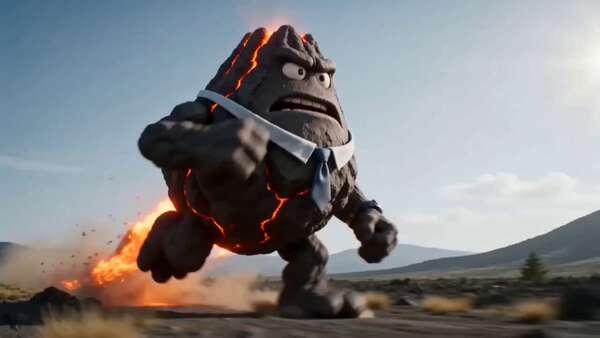
A giant volcano wearing a tiny necktie sprints across landscapes at impossible speed. Lava trails behind like sweat. It checks a wristwatch repeatedly. Entire countries watch in co…
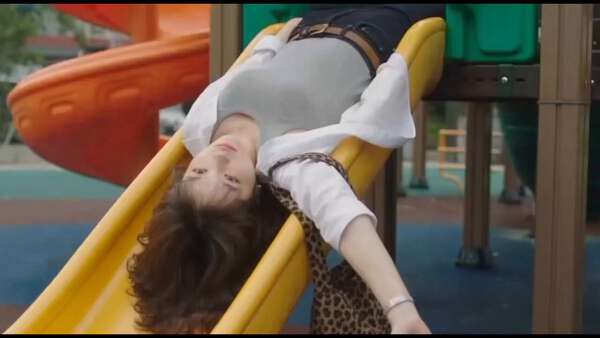
Created a video of a beautiful Korean girl having a playful, dreamy day at a colorful outdoor playground. She wears a casual white shirt, dark jeans, sneakers, and carries a stylis…
Create a 15-second ultra-realistic luxury skincare commercial featuring an elegant glass jar labeled “AQUA LUXE – DEEP HYDRATION” in a cool blue, refreshing environment. Start with…