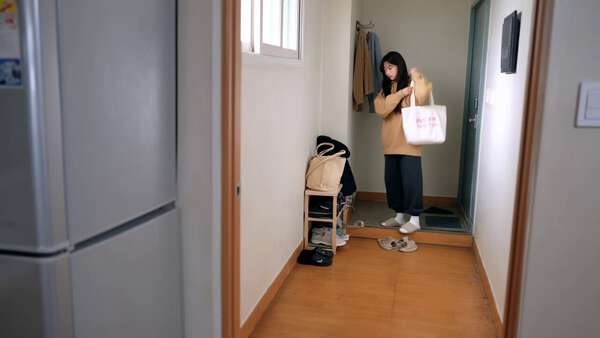
Earphone Falling Morning MiniDV
home-video footage, 4:3. Handheld consumer camcorder, subtle shake, imperfect framing, autofocus hunting, exposure shifts near the doorway, faded colors, soft contrast, DV compress…
オープンソース の素晴らしい動画プロンプト集 · 6,491件収録
Do this for Paris: <instruction> 1. Inference Engine Input A is a Major Global City (e.g., Paris, New York, Venice, Tokyo, Dubai). Deconstruct the city to generate 3 Cartographic Assets : The Anchor (The Landmark): Identify the single most iconic, recognizable vertical structure. (e.g., Paris -> The Eiffel Tower. NYC -> The Empire State Building. Dubai -> Burj Khalifa). The Fabric (The Architecture): Identify the dominant building style, roof types, and color palette of the dense urban areas. (e.g., Paris -> Beige Haussmann blocks with grey slate roofs. Venice -> Terracotta and peeling stucco. Tokyo -> Dense glass, concrete, and neon). The Artery (The Flow): Identify the primary channel cutting through the city. (e.g., Paris/London -> A wide, murky green River. LA -> A multi-lane concrete Highway. Venice -> A Canal).
2. Container Goal: "Non-Euclidean Aerial" Photography. The Setting: High altitude, suspended in the sky. The Background: A thick, fluffy bed of Cumulus Clouds sits just below the central object. Through gaps in the clouds, a faint, hazy aerial view of the "normal" flat city is visible miles below. The Sky: A soft, clear sky transitioning with warm, golden-hour light.
3. Geometry The Structure: The entire city is constructed on the surface of a massive, continuous, intertwining Trefoil Knot (a complex 3D ribbon that loops over and under itself). The Gravity: Gravity is strictly local to the surface of the ribbon. Effect: Buildings grow perpendicular to the surface. As the ribbon twists, buildings point outwards in all 360 degrees—straight up, sideways, and completely upside-down at the bottom of the loops. The Artery: The "Flow" (Step 1) runs continuously down the absolute center of the ribbon, winding through the entire knot, completely defying physics (e.g., a river flowing upside down).
4. Narrative The Integration: The "Fabric" (Step 1) densely packs every inch of the ribbon. There is no empty ground, only tightly clustered city blocks curving with the geometry. The Highlight: The "Anchor" landmark (Step 1) is prominently placed on one of the outer, upward-facing curves of the knot, jutting out dramatically to break the silhouette. Scale: Include tiny, realistic details: cars driving on the twisting roads, boats navigating the curving river, and green trees lining the avenues.
5. Lighting & Atmosphere: Lighting: Cinematic Golden Hour. Low-angle, directional sunlight striking the knot from the side. Shadows: This lighting is CRITICAL to create deep, dramatic shadows where the loops of the knot overlap, emphasizing the extreme 3D depth and complexity of the structure. Aesthetic: Photorealistic Drone Photography, "Inception" meets M.C. Escher.
Output: ONE image, 1:1 Aspect Ratio, 3D Architectural Render, "Surreal Realism" aesthetic, Hyper-Detailed. </instruction>
home-video footage, 4:3. Handheld consumer camcorder, subtle shake, imperfect framing, autofocus hunting, exposure shifts near the doorway, faded colors, soft contrast, DV compress…
A heartwarming cinematic adventure — a young explorer discovers a magical blue bird, encounters playful creatures and gorillas in an enchanted forest, finds a mysterious glowing po…
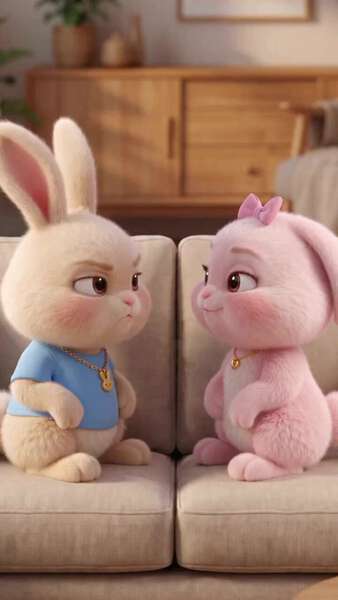
Create a cute, heartwarming 9:16 vertical animated video featuring two adorable anthropomorphic baby bunnies sitting side by side on a cozy beige sofa in a warm, elegant living roo…
A whimsical cinematic miniature world hidden deep inside a lush tropical rainforest after rainfall. The scene begins with an extreme close-up of large glossy green leaves covered i…
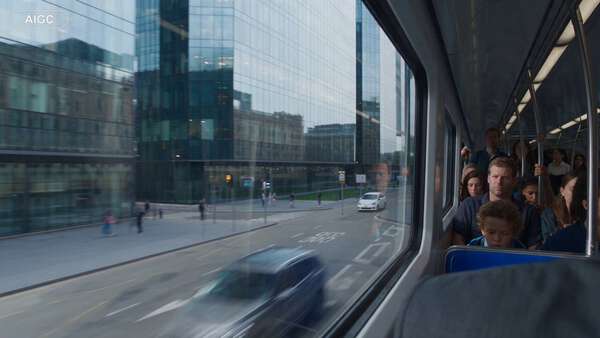
30s vertical 9:16 first-person smartphone video. One continuous take, no cuts. Cheap phone held chest-height inside a packed maglev train, looking out the left window. Shaky, crook…
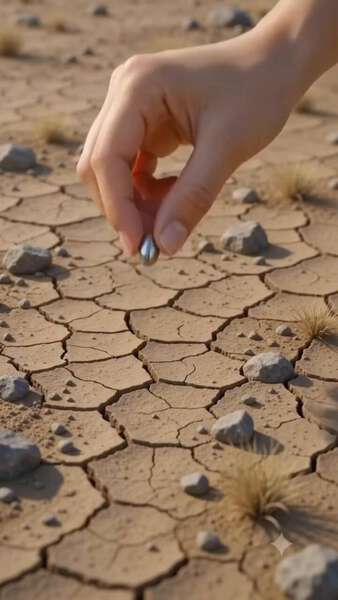
A hyper-realistic, magical macro time-lapse video in a dry, cracked desert landscape. A delicate hand places a tiny sunflower seed into the cracked dry earth, then picks up a fluff…