Hydration Meets Luxury In Every Drop
Create a 15-second ultra-realistic luxury skincare commercial featuring an elegant glass jar labeled “AQUA LUXE – DEEP HYDRATION” in a cool blue, refreshing environment. Start with…
オープンソース の素晴らしい動画プロンプト集 · 6,491件収録
OMEGA SPEEDMASTER MOONWATCH "BORN QUALIFIED"
65mm IMAX. Ultra-wide anamorphic Panavision. Film grain building progressively — starts clean, ends maximum. Key light: cold white — mission control fluorescent. Secondary: warm capsule interior amber. Flares: from the hesalite crystal and the tachymeter bezel edge — unique oval anamorphic signature. Background: Omega factory → Mission Control Houston → lunar surface at reveal. 00:00–00:02 · THE CALIBRE 321 Inside the movement at microscopic scale. The column wheel of the chronograph mechanism — the most complex component — assembles first. Each column rising from the plate in sequence. The lever system engaging the wheel. Camera watches the first dry-run of the chronograph: the start lever trips, the column wheel rotates one position, the chronograph seconds hand sweeps its first second at 18,000 vph. The mechanism works. The test is passed. 00:02–00:04.5 · THE CASE AND CRYSTAL Speed 50%. The 42mm stainless case machines itself — the asymmetric case with its crown and pushers on the left. Each pusher threads into its tube. The hesalite acrylic crystal — chosen over sapphire for its behavior in vacuum — descends and pressure-fits into the bezel. Camera underneath looking up through the crystal as it seats — the watch dial now visible through it, slightly warm in color. 00:04.5–00:07 · MISSION CONTROL Speed 15%. The Speedmaster — fully built — sits on a metal desk under fluorescent lights. A hand in a NASA flight suit sleeve reaches in and straps it to a wrist over a pressure suit. Camera macro on the deployment clasp latching. Then: the wrist lifts and the camera follows — we're in Mission Control, Houston, 1969. Banks of screens, engineers in white shirts and ties. The wrist checks the Speedmaster against the mission clock on the wall. 3… 2… 1… 00:07–00:10 · LAUNCH Speed 8%. The chronograph pushers — both of them — pressed simultaneously by a gloved thumb. The seconds hand begins sweeping. The camera pulls back as the room shakes — Saturn V launch vibration. The Speedmaster on the wrist, perfectly steady, counting. The only thing not shaking is the watch and the hand wearing it. 00:10–00:13 · THE MOON Speed 3% — absolute slow motion. A boot descends onto lunar regolith — the dust pluming upward in lunar gravity's lazy arc. The Speedmaster on the wrist above, visible in frame. Camera rotates slowly to face the watch: the tachymeter bezel reading mission elapsed time. The lunar surface in background, Earth hanging above the horizon. No sound. Absolute silence. The seconds hand sweeps. 00:13–00:14.5 · THE REVEAL Speed 2%. The Speedmaster floating in the void of space — Earth below, stars above. Every surface element reads: the black dial, the three sub-registers, the hesalite crystal's warm distortion at the edges, the steel case catching starlight. The chronograph still running. Mission: ongoing. 00:14.5–00:15 · END CARD Hard cut to black. Omega Seahorse. "The first watch worn on the moon." No grain — this moment is crystal clear. Then: one frame of grain. Cut.
Create a 15-second ultra-realistic luxury skincare commercial featuring an elegant glass jar labeled “AQUA LUXE – DEEP HYDRATION” in a cool blue, refreshing environment. Start with…
30-second ultra-photorealistic live-action cinematic portrait film, ancient Chinese Tang Dynasty garden aesthetic, intimate historical portrait photography / classical beauty MV. S…
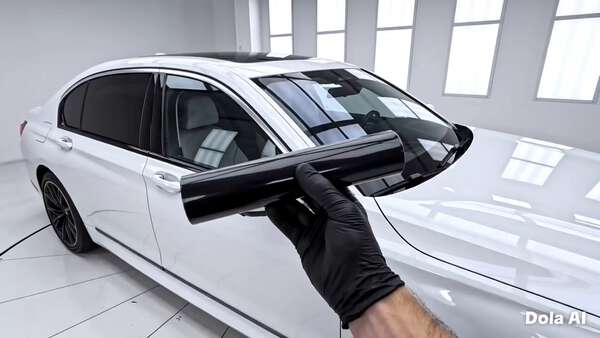
Create a 10-second ultra-photorealistic premium automotive ASMR video, continuous FIRST-PERSON MALE POV in a sterile white luxury detailing studio, same white premium sedan and mat…
Create a 30-second premium cinematic tropical travel vlog following a very beautiful 20-year-old woman enjoying a dreamy summer vacation in Hawaii. The overall feeling should be lu…
A bright, clean beauty commercial of a young Southeast Asian woman with fair glowing skin, dark hair pulled neatly back, wearing a simple white camisole, standing in a modern bathr…
Created a video of a beautiful Korean girl having a playful, dreamy day at a colorful outdoor playground. She wears a casual white shirt, dark jeans, sneakers, and carries a stylis…